A weaker rupee is stretching Gulf NRI property budgets. These Indian markets are winning
Date Posted : 2026-07-20
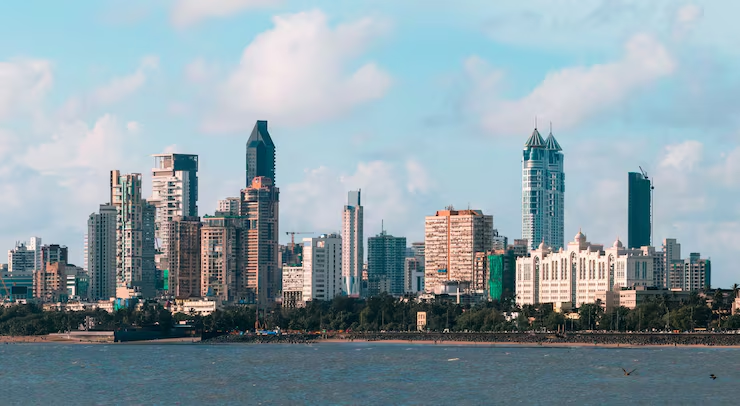
Mumbai leads as NRI buyers chase airports, metro links, rental income and long-term growth.
Dubai: A weaker Indian rupee is giving Gulf-based NRIs greater buying power in India, with investors increasingly targeting neighbourhoods linked to new airports, metro lines, business districts and strong rental demand.
Mumbai and its surrounding metropolitan region continue to attract the largest share of interest, followed by Bengaluru, Hyderabad, Pune and Delhi-NCR. Buyers are also looking at emerging locations such as Navi Mumbai, Panvel and Ahmedabad’s GIFT City for longer-term growth.
The search has moved beyond established addresses, with investors placing greater weight on infrastructure, employment growth, rental income and the ability to resell the property later.
“NRIs today aren't chasing a prestigious pin code so much as they're chasing growth: better infrastructure, better quality of life, and a market that's actually moving forward,” said Bhadresh Shah, Managing Director of Today Group.

Weaker rupee stretches NRI budgets
The continued depreciation of the rupee against the US dollar and the UAE dirham is allowing overseas Indians to obtain more rupees for the same amount of foreign currency.
Santhosh Kumar, Vice Chairman of ANAROCK Group, said the currency advantage was strengthening purchasing power across the country’s main property markets.
“The Indian rupee’s continued depreciation against the US dollar and the AED is boosting NRI purchasing power in India. The currency and yield-gap dynamics are, in fact, an active driver of cross-border capital flows,” he said.

GCC-based professionals remain among the most active NRI property buyers, according to Parthh K. Mehta, Chairman and Managing Director of Paradigm Realty.
Demand from this group is concentrated in RERA-compliant developments across Mumbai, Bengaluru, Delhi-NCR, Hyderabad and Pune, with luxury homes drawing a growing share of investment.
Premium apartments priced above ₹1 crore accounted for 62% of residential sales across India’s seven largest cities during the first half of 2025, compared with 51% a year earlier, according to JLL India data cited by Mehta.

Mumbai remains the main draw
Mumbai continues to lead NRI demand, although buyers are dividing their attention between expensive central locations and newer growth corridors.
Khar West, Worli, Lower Parel and Powai are attracting buyers seeking established luxury neighbourhoods, rental demand and proximity to major employment centres.
Pali Hill, Bandra, the area surrounding Bandra Kurla Complex and Mumbai’s coastal districts are also seeing interest from buyers looking for wealth preservation and high-end homes.
Vishal N Ratanghayra, Founder and Chief Executive Officer of Platinum Corp, said NRI buyers were prominent in high-value purchases across these locations.
“NRI buyers currently dominate high-ticket purchases in the luxury segment in these pockets, a move that combines wealth preservation with a prestige location and long-term capital appreciation potential,” he said.

Interest is also moving towards Chembur, Borivali and locations along Mumbai Metro Line 3 and the Coastal Road corridor.
Navi Mumbai attracts long-term buyers
Navi Mumbai, Panvel, Kharghar and Upper Kharghar have emerged as some of the most closely watched locations among NRIs seeking lower entry prices and longer-term appreciation.
The Navi Mumbai International Airport, Atal Setu, metro expansion and wider transport links are opening up new residential and commercial corridors across the region.
Newer locations can also offer larger homes and planned communities that are difficult to find within central Mumbai.
Bhadresh Shah said infrastructure was creating a structural change across Navi Mumbai and Panvel, giving investors an opportunity to enter before these areas become fully developed.
“Globally, real estate values have always moved with infrastructure, and India is no exception. Betting on a market that's still growing tends to pay off far better than trying to time short-term cycles,” he said.

Technology hubs remain popular
Employment centres continue to influence where NRIs buy outside Mumbai.
Hinjewadi, Baner and Kharadi are among the preferred locations in Pune due to their technology campuses, office demand and expanding transport networks.
Hyderabad buyers are focusing on Gachibowli, HITEC City, Kokapet and the Financial District, while Whitefield and North Bengaluru remain popular due to their technology and business ecosystems.
Sector 150 in Noida and the Dwarka Expressway corridor are drawing attention in Delhi-NCR, supported by infrastructure development and access to the upcoming airport at Jewar.
GIFT City near Ahmedabad is also attracting NRI interest as its financial services ecosystem expands.
Kolkata, Coimbatore, Indore and Visakhapatnam offer lower entry costs and percentage growth potential, although buyers may face thinner resale liquidity than in the largest metropolitan markets. Kolkata offers rental yields of as much as 6.3%, according to ANAROCK.