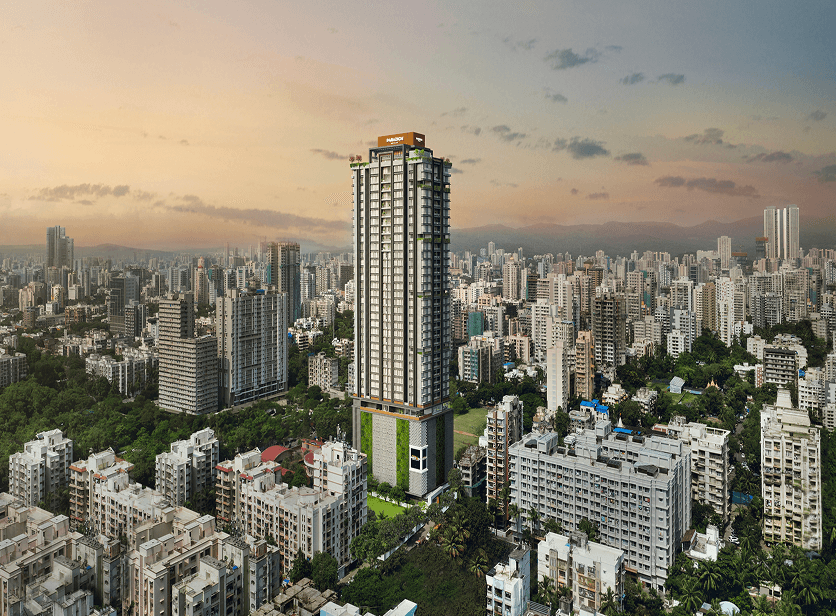
Welcome to an oasis of superlative amenities with emboldened community living experience. Thoughtful Spaces designed where residents can meet and share stories. Unbound inspiration from every corner of global metropolis, placed thoughtfully in this 42 storey marvel of Borivali.
Anantaara offers contemporary spaces that deliver impeccable and eternal living needs of multi-generation families encapsulated with an imaginative flair for their future needs. Bringing a holistic lifestyle delight with the landscaped podium which infuses a relaxed, yet elegant experience with exquisite vibes and multitude amenities. Enjoy the podium level perks at 135 ft. above ground, with access to a gym, indoor games area, and Minitheatre or step upstairs to skydeck 475 ft. high to take a plunge in the infinity sky pool and discover sprawling parkside views in an eclectic setting, with an attached viewing deck to savour the elusive pagoda sunset views.
The grand lobby is an intimate space for small groups to meet and connect. Decked in plush, luxurious finishes with Italian marbles and state of art designer panels, this salon area is aptly suited for rendezvous with visitors giving you comfort to meet outside your apartments.
Shimpoli, Borivali (West)
2/3/4BHK, Duplex, Triplex & Penthouse
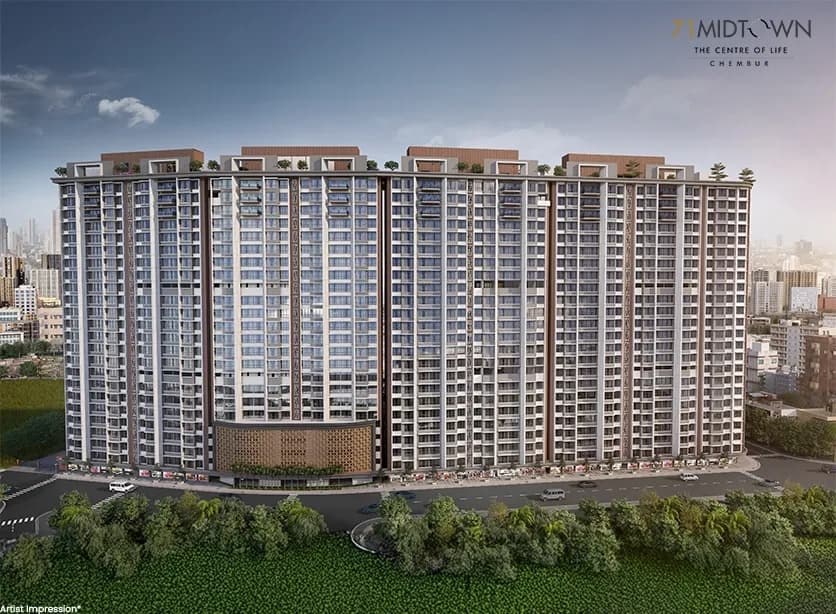
PARADIGM 71 MIDTOWN
Once known as an industrial destination with the presence of companies such as RCF and BARC, Chembur Prime, is transforming rapidly into a premium real estate destination of Mumbai. The Mahul creek, home to thousands of flamingos migrating from Gujarat every year from November to June.
The numerous public parks that dotted the suburb all provided for the city’s green lungs made Chembur Prime a desirable destination for residential development with the early 70s, seeing a plethora of bungalows coming up near the verdant Tata Institute of Social Sciences.
The availability of large industrial land parcels for residential developments amply supported this transformation. As large industrial land parcels were unlocked for real estate developments, several developers gravitated towards Chembur Prime and the micro-market started buzzing with new developments.
The opening of the Eastern Freeway connecting South Mumbai to Navi Mumbai via Wadala-Chembur Prime puts this side of the suburb on the fast track of growth, making it the new city centre.
Chembur
1/2/3 BHK
PARADIGM ALAYA
Favorably located in the vibrant locale of Oshiwara in Mumbai, Paradigm Alaya stands as a testament to meticulous urban planning. Spanning across an impressive 10-acre expanse, this project is not just about real estate but about crafting a thriving community in one of Mumbai's most desired commercial hotspots. Nestled in the pulsating heart of the city of dreams, Paradigm Alaya epitomizes the art of strategic geo-location. This prime project boasts the largest floor plans in the area, making it a landmark in Oshiwara. It offers residents and businesses an opportunity to be part of a dynamic environment where extravagance meets everyday life.
Oshiwara, Andheri (West)
1/2 BHK
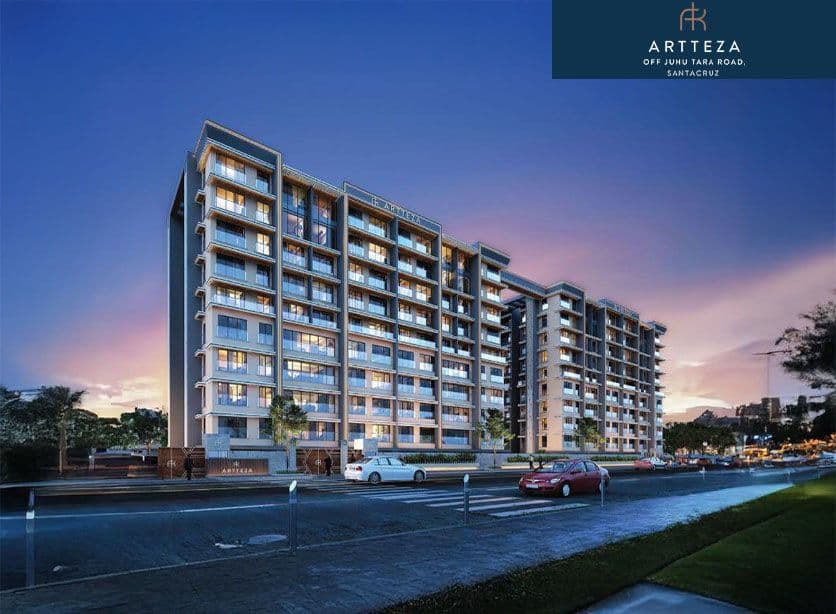
PARADIGM ARTTEZA
In a city where living close to the sea is the ultimate measure of success, Juhu-Santacruz with its beautiful beach is one of the marquee residential addresses of Mumbai.Home to Bollywood’s top league superstars, sports celebrities and businessmen, this suburb is centrally Image for representation purpose only located and well connected to all parts of Mumbai. A well heeled neighbourhood with luxury hotels, iconic fine dining, prestigious educational institutes and world-class healthcare, the suburb of Juhu-Santacruz provides everything you need to live a complete life.
(Wing C&D ) Off Juhu Tara Road, Santacruz (West)
2/3/4 BHK
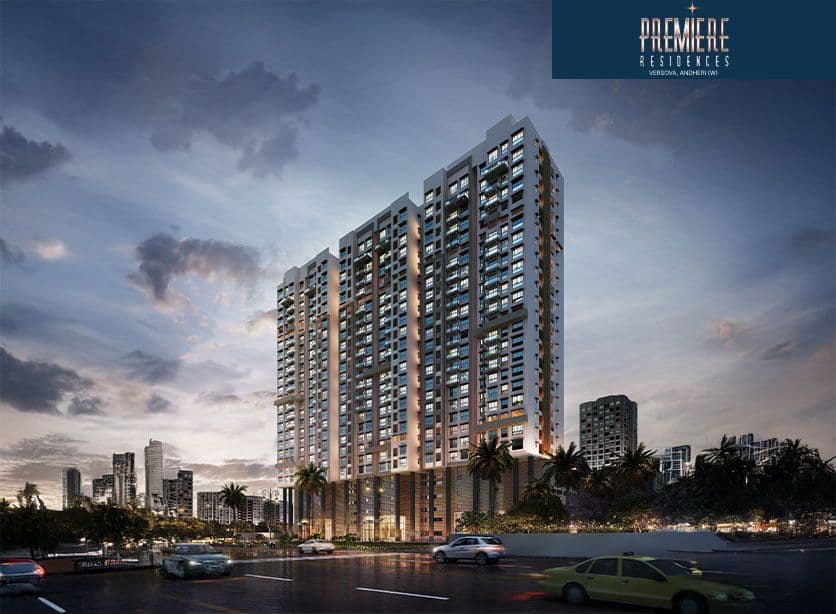
PARADIGM PREMIERE RESIDENCES
Paradigm Realty named erstwhile to represent the ethos of company focused to create marvels which become benchmarks and landmarks. Paradigm Realty Group is a consortium with over a decade of delivery in Mumbai's real estate spearheaded by credible veterans.
The Group is an eclectic mix of diversified yet aligned individuals focussed to create marvels, which are based on utilitarian concepts. The design interplay of curvilinear detailing & straight-line architecture, our designs are discerning and filled with perspective. Instead of following cliched patters, the Group believes in setting trends.
Paradigm Really consistently encourages application of global contemporary techniques, which are the keys to quality as well as timely deliveries.
Versova, Andheri (West)
2/2.5/3 BHK
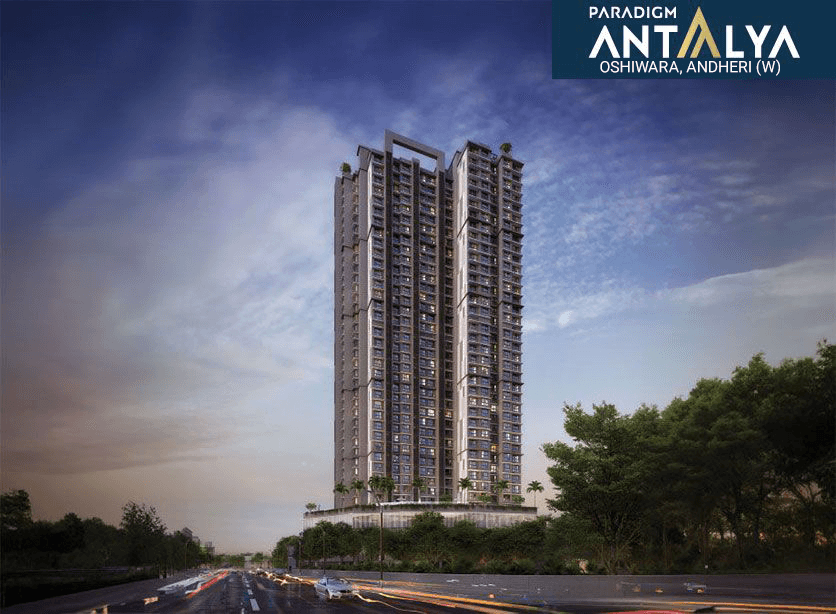
PARADIGM ANTALYA
The best of Mumbai’s lifestyle offerings coalesce at Paradigm Antalya, Oshiwara’s newest landmark. Located minutes away from both airports and well connected to major transport hubs, shopping malls and business districts, it offers the luxury of time in a city that never pauses.
Oshiwara, Andheri (West)
1/2/3 BHK
Why redevelopment is becoming the smarter choice for older Mumbai housing societies
For many housing societies across Mumbai, redevelopment begins as a conversation about an ageing building. Cracks appear, waterproofing becomes a recurring expense, lifts require frequent repairs, and maintaining an older structure becomes increasingly difficult. But redevelopment is about much more than replacing an old building with a new one.
A well-planned redevelopment can address structural concerns, unlock underutilised development potential, improve living standards and help regularise long-standing documentation issues. For society members, it can mean moving from an ageing structure into a modern building while retaining their ownership rights and receiving contractual benefits such as additional carpet area, corpus and temporary accommodation arrangements, subject to the terms negotiated with the developer.
The decision, however, should never be based only on the proposed design, amenities or the amount offered to members. The developer's ability to conduct proper feasibility studies, verify title, manage approvals, arrange project finance and execute construction is equally important.
This is why selecting experienced redevelopment builders in Mumbai requires a different evaluation approach from choosing a developer for a conventional residential project.
Redevelopment involves an existing community, existing ownership rights, statutory approvals, temporary relocation, rehabilitation obligations and a new construction programme operating together. The developer has to manage these moving parts while maintaining transparency with the society throughout the process.
For a managing committee, the real objective should therefore be simple: identify a redevelopment partner that can make the project legally sound, financially viable and practically deliverable.
What should you expect from experienced redevelopment builders in Mumbai?
Redevelopment requires a specific combination of legal, technical, financial and construction expertise. A developer may have an extensive residential portfolio, but that alone does not establish its ability to handle the complexities of society redevelopment.
Experienced redevelopment builders in Mumbai should be able to demonstrate how they approach the project before construction even begins.
The first step is usually feasibility. This involves understanding the existing plot, development potential, applicable regulations, existing members, existing carpet areas and the likely project economics. A feasibility assessment helps establish whether the redevelopment proposal can realistically support the obligations being discussed with society members.
Title and land documentation form another critical layer. The developer should examine the ownership history of the property, society records, conveyance status, encumbrances and relevant land records before the society commits itself to an agreement.
The approval roadmap should also be clearly understood. Redevelopment can involve multiple statutory and municipal permissions, and the sequence in which these are obtained can have a direct impact on the project timeline.
A credible developer should also be able to explain how members will be accommodated during construction, how temporary rent or accommodation will be managed, how construction milestones will be monitored and what contractual protections will apply if delays occur.
The most important point is that these questions should be answered with documentation and processes, not simply verbal assurances.
Could your society have a title problem without even knowing it?
A building can function normally for decades while having an unresolved issue in the title documentation beneath it.
This is particularly relevant to older Mumbai housing societies. In many cases, the society was formed, members purchased their flats and the building continued to operate normally, but the formal conveyance of the land to the society was never completed.
That distinction can remain invisible to residents during ordinary day-to-day life. Maintenance continues, members buy and sell flats, general body meetings take place and the building remains occupied. The underlying title issue may only become prominent when the society attempts a major transaction such as redevelopment.
A conveyance deed formally transfers the rights in the land and property from the previous owner or developer to the society. Where voluntary conveyance has not been completed, a society may need to explore the legal mechanism of deemed conveyance available under the Maharashtra Ownership Flats framework.
This is one reason title verification should happen before a redevelopment agreement is finalised.
The issue is not simply about whether the society can occupy its building. It is about whether the underlying ownership documentation is sufficiently clear for the proposed redevelopment, financing, registration and future transactions.
A thorough title review can identify issues such as:
Missing or incomplete conveyance documentation
Gaps in the historical chain of title
Existing mortgages, charges or encumbrances
Inconsistencies in land records
Pending litigation affecting the property
Missing society documentation
Issues involving the property card or applicable land records
Documentation required for deemed conveyance
Identifying these matters early gives the society an opportunity to resolve them before they become obstacles during construction or project registration.
How the best redevelopment builders in Mumbai approach title due diligence
The best redevelopment builders in Mumbai should treat title diligence as a project prerequisite rather than a formality.
The first stage is generally a detailed title search. This involves examining the historical chain of ownership and relevant documents to establish how rights in the land have moved between parties.
Depending on the property, the due diligence exercise can include reviewing the registered documents, Index II records, property card, 7/12 extract where applicable, society registration documents, conveyance records and available encumbrance information.
The objective is to identify the legal position of the property before the society enters into an arrangement that could run for several years.
Encumbrance verification is equally important. A property may have mortgages, charges, attachments or other interests that need to be identified and addressed. Existing litigation also needs to be examined because a dispute affecting the land can materially influence the redevelopment process.
Where conveyance has not been completed, the society and its legal advisers should understand whether deemed conveyance is appropriate and what documentation is required.
This is also where independent professional advice becomes valuable. A society should not rely exclusively on a developer's internal assessment of its own project. Independent legal and technical professionals can provide an additional layer of scrutiny before members make a major collective decision.
For residents, one simple principle is worth remembering: a modern building does not automatically resolve an old legal problem. The redevelopment process should be structured so that title regularisation and documentation are addressed as part of the project's foundation.
What actually determines the value your society can unlock through redevelopment?
The redevelopment potential of a property is not determined simply by the age or height of the existing building.
A major factor is the development potential available on the plot under the regulations applicable to that property. Depending on the location, plot characteristics and applicable provisions, development potential may involve permissible FSI, TDR, incentive FSI or redevelopment-specific provisions.
This is why two societies with apparently similar buildings can receive very different redevelopment proposals.
A professional feasibility assessment should consider factors such as:
Factor
Why it matters
Plot area and configuration
Influences the development potential and planning possibilities
Existing built-up area
Helps establish the current development position
Existing member carpet areas
Determines rehabilitation requirements
Applicable development regulations
Establishes the permissible development framework
FSI and development potential
Influences the potential saleable component
Access and site constraints
Can affect design and construction feasibility
Title and encumbrances
Determines whether the property can progress cleanly
Approval requirements
Influences project sequencing and timelines
Construction economics
Determines whether the proposed redevelopment is commercially viable
The developer then has to balance the rehabilitation requirements of existing members against the additional development that can potentially be monetised.
This is the fundamental economic structure behind many redevelopment projects. Existing members are rehabilitated into the new building while the developer uses the permissible additional development potential to create a saleable component.
For a society, the important question is not simply, "Who is offering the most?"
The better question is, "Is the proposal financially and legally realistic, and can the developer actually deliver everything being offered?"
A proposal that looks attractive on paper but is based on unrealistic assumptions can create problems later. Feasibility, funding capacity and execution capability should therefore be assessed alongside the member benefits being proposed.
When does an ageing Mumbai building become ready for redevelopment?
There is no single age at which every building in Mumbai must be redeveloped. The decision depends on structural condition, maintenance requirements, development potential, legal circumstances and the collective decision of the society.
However, older buildings often reach a point where recurring repairs no longer provide the long-term solution members are looking for.
Structural audits become particularly important for older buildings. The audit provides an expert assessment of the condition of the structure and can help the society understand whether repairs, major structural intervention or redevelopment should be evaluated.
For a building experiencing repeated waterproofing failures, corrosion, structural deterioration or rising maintenance requirements, continuing with individual repair projects may not always be the most effective long-term strategy.
There is also a financial dimension.
A society may spend repeatedly on repairs without addressing the fundamental limitations of the existing structure. At some point, members may reasonably ask whether continuing to invest in an ageing building makes more sense than evaluating a complete reconstruction.
The decision should be evidence-led rather than based on fear or speculation.
A proper evaluation can include:
Structural audit findings
History of major repairs
Future maintenance requirements
Existing development potential
Title and documentation status
Estimated redevelopment feasibility
Member rehabilitation requirements
Financial capability of potential developers
This allows members to compare the long-term implications of repair against the potential benefits of redevelopment.
How top redevelopment builders in Mumbai turn unused FSI into better homes
One of the most important concepts for society members to understand is development potential.
An older building may have been constructed under regulations that allowed considerably less development than what may be permissible today. Changes in development regulations over time can create additional potential on the same plot, subject to the property's specific characteristics and applicable rules.
Redevelopment seeks to use this potential more efficiently.
The developer's feasibility exercise assesses what can be constructed, what is required to rehabilitate existing members and what additional component can potentially be sold. The commercial value generated from that saleable component forms an important part of the project's funding structure.
This can allow members to receive a new home without directly financing the entire cost of reconstruction.
However, the amount of additional area that can be created cannot be assumed from a generic calculation. It depends on the actual property, applicable regulations, planning constraints, existing development and approval requirements.
This is why top redevelopment builders in Mumbai should be evaluated on their ability to explain the feasibility clearly.
Members should be able to understand:
What the existing development position is.
What development potential may be available.
What area is required for member rehabilitation.
How much additional saleable development may be possible.
How the project is expected to be funded.
Which approvals are required before construction can progress.
What assumptions the proposal depends upon.
The more transparent this calculation is, the easier it becomes for a society to distinguish between a commercially viable redevelopment proposal and one based primarily on attractive promises.
What should you check before choosing a redevelopment partner for your society?
Choosing the developer is arguably the most consequential decision a society makes during redevelopment.
The evaluation should begin with redevelopment experience rather than the size of the developer's overall residential portfolio.
Ask how many redevelopment projects the developer has completed and how many are currently under execution. More importantly, understand the nature of those projects. Society redevelopment involves rehabilitation, temporary accommodation, member communication and construction on land with existing stakeholders. These are different challenges from constructing a conventional project on vacant land.
Financial capability is another essential consideration.
The developer needs sufficient capacity to fund construction and meet contractual obligations during the period when existing members are temporarily displaced. The society should understand the project's funding structure and how construction expenditure will be supported through the development cycle.
The proposed agreement should also be examined carefully. Carpet area, temporary accommodation arrangements, corpus, payment schedules, construction milestones, possession obligations and consequences of delay should be documented clearly.
Past performance provides another valuable signal.
Instead of relying exclusively on testimonials selected by the developer, a society can seek direct feedback from members of completed or ongoing redevelopment projects.
Questions should focus on actual execution:
Were temporary accommodation commitments honoured on time?
Was communication consistent?
Were construction milestones achieved?
Were changes communicated transparently?
How were unexpected issues handled?
Would the society select the same developer again?
A strong redevelopment partner should be comfortable with this level of scrutiny.
How should redevelopment builders in Mumbai manage approvals, construction and timelines?
Redevelopment is not completed when a society selects a developer. The selection is only the beginning of a much longer process.
A well-managed project needs a clear sequence covering society approvals, legal documentation, planning, statutory permissions, project registration, construction and eventual occupation.
The exact approval pathway varies according to the property and the applicable regulations, but the principle remains consistent: each stage needs to be understood before the next major commitment is made.
The developer should maintain a documented project plan rather than relying on a single completion date.
Construction management should also be milestone-based. Members should have visibility into meaningful stages of progress rather than receiving occasional general updates.
RERA compliance adds another important layer of transparency where the project falls within its applicable scope. Registered redevelopment projects can involve obligations relating to project disclosures, allottee rights, carpet area and financial management.
For the society, this means the redevelopment agreement and project documentation should be reviewed carefully with qualified legal professionals.
An effective project management framework should cover:
Stage
Key focus
Initial feasibility
Development potential, structural and financial viability
Due diligence
Title, encumbrances and society documentation
Developer selection
Experience, capability and commercial proposal
Agreement stage
Member rights, obligations, timelines and protections
Approvals
Statutory and municipal permissions
RERA stage
Registration and applicable project disclosures
Member transition
Temporary accommodation and relocation
Construction
Quality, milestones and progress monitoring
Completion
Occupation-related approvals and handover
Post-handover
Documentation and member possession
The role of the developer is therefore much broader than construction. It involves coordinating legal, technical, financial and operational aspects of the project until the new building is ready for occupation.
Is your society ready to choose the right redevelopment partner with confidence?
For an older Mumbai housing society, redevelopment can represent an opportunity to solve several problems at the same time.
It can replace an ageing structure with a modern building, improve living conditions, make better use of development potential and address documentation issues that may have remained unresolved for decades.
But the outcome depends heavily on the quality of the redevelopment process and the partner selected to execute it.
Members should look beyond the largest proposed area or the most attractive headline benefit. A sustainable redevelopment proposal needs a realistic feasibility assessment, clear title, adequate financial capability, experienced execution, transparent documentation and a construction plan that can be monitored throughout the project.
The society should also maintain its own professional oversight. Independent legal, technical and financial advice can help members understand the proposal before they commit to it.
The most important questions to ask a prospective developer include:
What is the current title and conveyance status of the property?
Has a complete title search been conducted?
What development potential has been considered in the feasibility?
How will existing members be rehabilitated?
How will temporary accommodation be managed?
What is the proposed construction and approval sequence?
How will project funding be structured?
What protections apply if construction is delayed?
What redevelopment projects can the society independently verify?
Can existing society members be contacted for feedback?
Redevelopment should ultimately be treated as a long-term transformation of the society, not simply a construction contract.
The right redevelopment partner will be able to explain the legal, financial and technical aspects of the proposal in a way that committee members and residents can understand. It will be willing to subject its assumptions to scrutiny, provide documentation and demonstrate its execution capability through evidence.
For Mumbai societies considering redevelopment, that level of transparency is not an optional advantage. It is one of the clearest indicators that the project is being approached with the seriousness it deserves.
FAQs
Why is redevelopment becoming a popular choice for older Mumbai housing societies?
Redevelopment can replace ageing structures with modern homes, better amenities and improved safety. It can also help societies make better use of available development potential.
What should a society check before choosing a redevelopment builder?
A society should evaluate the developer’s redevelopment experience, financial strength, legal due diligence and past project execution. Member benefits, timelines and contractual protections should also be reviewed carefully.
Why is title verification important before redevelopment?
Title verification helps identify issues such as missing conveyance, ownership gaps, encumbrances or pending litigation. Resolving these matters early can help prevent delays during redevelopment.
How does development potential affect redevelopment benefits?
Factors such as plot size, applicable FSI, TDR and development regulations influence how much can be constructed. This determines the project's financial feasibility and the benefits that may be offered to existing members.
How can a society ensure a smooth redevelopment process?
The society should use proper feasibility studies, independent legal and technical advice, clear agreements and regular project monitoring. Choosing an experienced and transparent redevelopment partner is equally important.