Developers Brace For Higher Funding Costs After Rate Hike
Date Posted : 2026-10-07
Original Article Link : https://www.businessworld.in/article/developers-brace-for-higher-funding-costs-after-rate-hike-627308
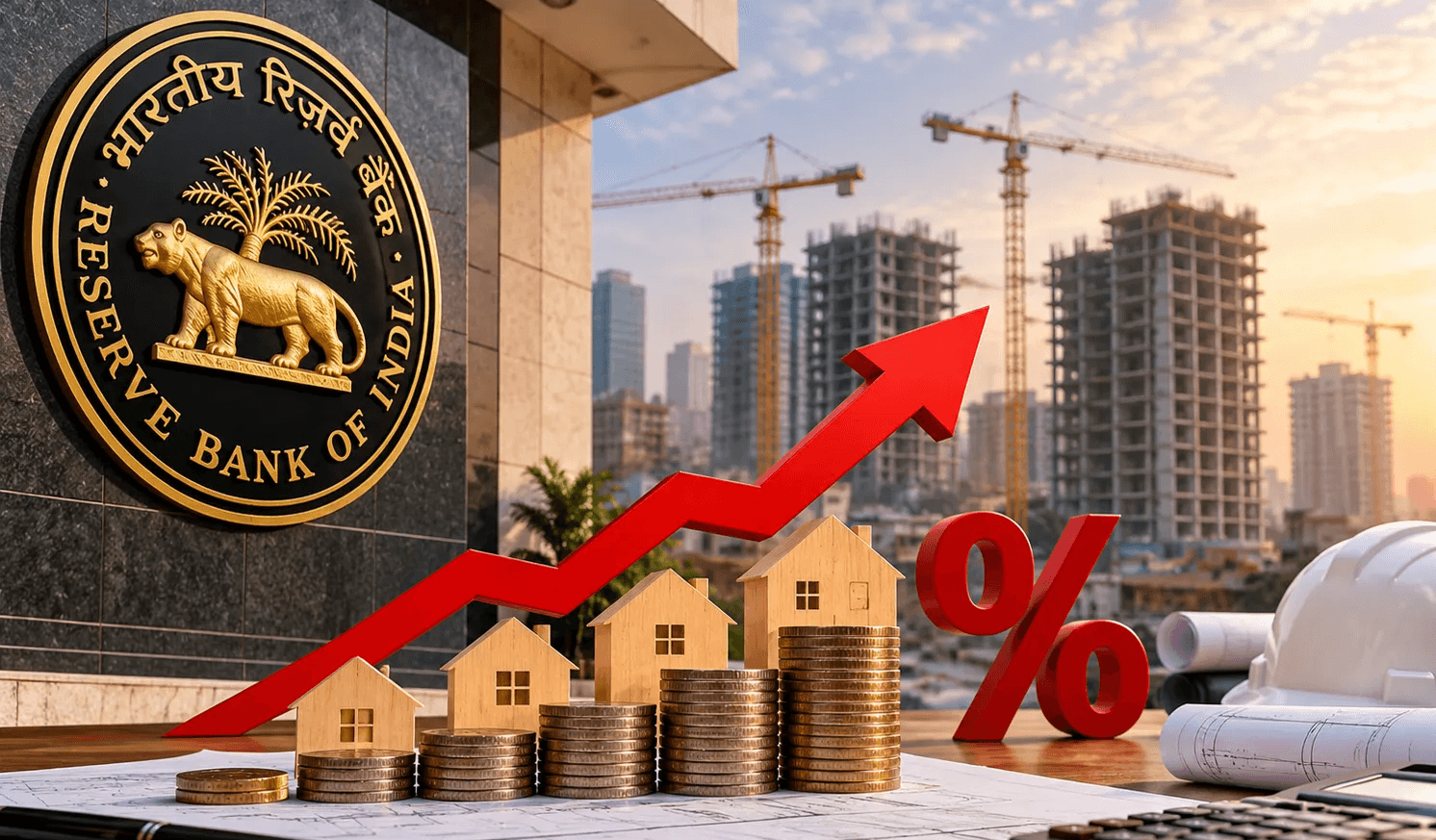
The Reserve Bank of India’s (RBI) 25-basis-point repo rate hike to 5.50 per cent puts the cost and deployment of capital back in focus for real estate developers. Higher funding costs could influence how developers finance ongoing projects, allocate capital to new developments and manage cash flows as they balance construction expenses with execution timelines.
The impact will depend on how the rate increase feeds into lending costs and how long the higher-rate environment persists. Greater visibility on the rate cycle will therefore be important for developers as they plan project financing, capital deployment and new investments.
Funding Costs Under Pressure
Higher interest rates could add to developers’ cost of capital at a time when construction continues to face pressure from material, labour, energy and logistics costs. The combination could make project-level cash-flow management more important. “For developers, the implications will extend to project finance, working capital and the overall cost of capital at a time when construction itself continues to face pressure from material, labour, energy and logistics costs,” said Srishti S Anandd, Co-founder and Chief Advisor, Paradigm Realty.
“A higher rate will therefore reinforce the need for discipline across the sector. Developers will need to manage the cost of capital alongside construction inflation, maintain healthy project cash flows and ensure that pricing remains aligned with genuine market demand,” Anandd added. The increase could therefore have implications beyond the headline cost of borrowing, particularly for developers managing multiple projects with different funding requirements and execution timelines.
Capital Allocation In Focus
For developers, the trajectory of interest rates could also influence capital allocation across ongoing and new projects. Greater clarity on the rate cycle could help companies assess financing requirements and maintain execution momentum. Against this backdrop, Aakash Agarwal, Managing Director, Krisala Developers, said, “The 25-basis-point repo rate hike will have a measured impact on the housing market, with the larger question being how the rate and liquidity environment evolves from here. While the residential demand remains resilient, particularly as we enter the festive season with improving consumer sentiment, for developers, greater visibility on the rate cycle is important for financing, capital allocation and maintaining execution momentum across projects.”
Agarwal added, “Developers who remain focused on disciplined execution, strong value propositions and delivery certainty will be well placed to navigate the current environment.” The comments point to the importance of financing visibility for developers as they assess new projects and determine how much capital can be deployed without putting pressure on project-level cash flows.
Financial Discipline Gains Importance
Higher borrowing costs could make financial discipline and timely execution more important for developers, particularly for projects with significant funding requirements. “A 25-basis-point increase in the repo rate from 5.25 per cent to 5.50 per cent may create some near-term pressure on the real estate sector by marginally increasing borrowing costs for both homebuyers and developers,” said Ashish Bhutani, CEO, Bhutani Infra.
Financing Sentiment Remains Resilient
The rate increase could marginally affect borrowing costs and financing sentiment, although developers with strong demand and established project pipelines may be better positioned to absorb the impact. Santosh Agarwal, Executive Director and CFO, Alpha Corp Development Limited, said, “The RBI’s decision to raise the repo rate by 25 basis points marks a cautious shift in the interest-rate environment, particularly after a prolonged period of stability. While the move could marginally impact borrowing costs and financing sentiment, we do not expect it to significantly disrupt the underlying momentum in the real estate sector.”
“Developers may see some moderation in financing costs and buyer sentiment in the near term, but the sector’s structural growth drivers remain intact. The focus will now remain on maintaining demand resilience and market stability,” Agarwal added. This suggests that the immediate impact may remain manageable for developers with stronger balance sheets and projects supported by established demand. However, a prolonged period of higher rates could have a greater bearing on financing costs and investment decisions.
Construction Investment Draws Focus
The impact of higher financing costs could extend to the wider construction ecosystem, where companies make capital expenditure decisions based partly on the cost and availability of financing. Rajan Luthra, CFO, ACE - Action Construction Equipment Ltd., said, “For the construction equipment sector, higher financing costs may impact investment decisions in the near term. However, sustained government capex and infrastructure activity across roads, railways and urban development should continue to support demand and sector growth.”
Execution Gains Importance
The rate increase is therefore likely to make the cost of capital, project cash flows and investment discipline more important considerations for developers. While the extent of the impact will depend on rate transmission and the duration of the higher-rate environment, developers are likely to place greater emphasis on financing visibility, disciplined capital deployment and timely execution as they assess ongoing and new projects. Projects with strong fundamentals, clear execution visibility and genuine end-user demand could remain better positioned as developers navigate a potentially higher cost of capital.