Industry welcomes RBI repo rate pause
Date Posted : 2026-04-08
Original Article Link : https://www.constructionweekonline.in/news/industry-welcomes-rbi-repo-rate-pause
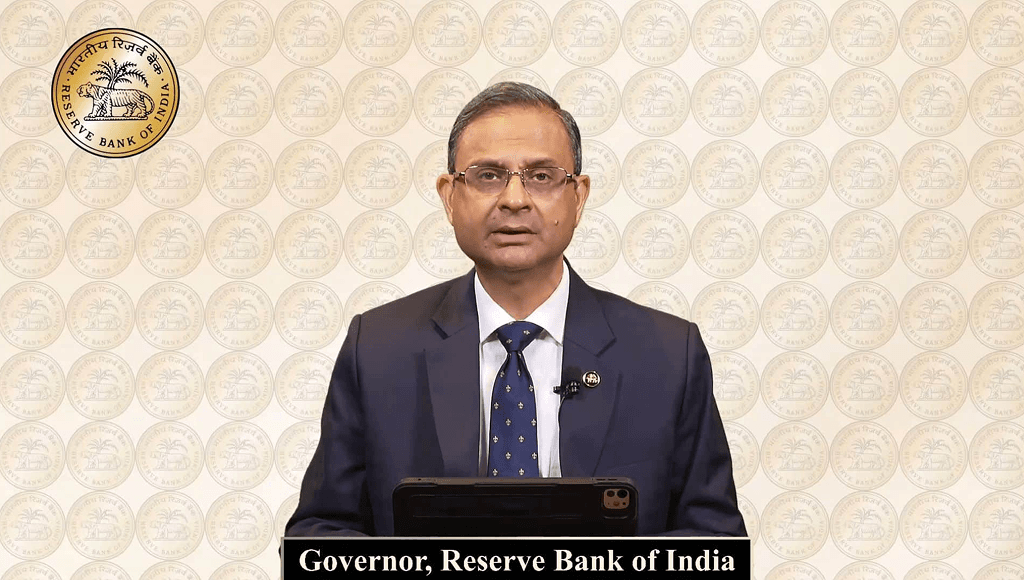
India’s real estate sector has reacted largely positively to the RBI’s decision to keep the repo rate unchanged at 5.25%, seeing it as a steadying move amid global uncertainty. The Reserve Bank of India’s Monetary Policy Committee (MPC) unanimously kept the policy repo rate unchanged at 5.25% today, retaining its neutral stance as the West Asia conflict upends the global growth-inflation outlook.
Announcing the first bi-monthly policy of FY2027, RBI Governor Sanjay Malhotra projected real GDP growth at 6.9% for FY2027, down from 7.6% estimated for the previous year, with risks “tilted to the downside.” CPI inflation for FY2027 is pegged at 4.6%, rising sharply to 5.2% in Q3, driven primarily by energy price pressures and potential El Niño disruptions to food supply.
In his statement, Malhotra acknowledges that “the economy is confronted with a supply shock,” adding that it is “prudent to wait and watch the changing circumstances and the evolving growth-inflation outlook.” While headline inflation remains below target at 3.2% in February, the Governor warns that upside risks from energy prices and supply-chain dislocations have “increased.” India’s forex reserves stand at $697.1 billion, providing about 11 months of import cover.
The reactions of India’s real estate industry indicates a dominant mood of relief and cautious optimism. According to developers the pause supports predictable funding, smoother project execution and better planning, and expect homebuyers to benefit from stable EMIs and continued affordability.
Several industry leaders also note that despite the global geopolitical uncertainties India’s housing demand has remained resilient, particularly in mid-income and premium segments. Moreover, the commercial real estate is being supported by GCC-led office leasing and domestic occupier activity. At the same time, some executives flagged risks from geopolitical tensions, raw material costs and delayed rate transmission, though these concerns were balanced by confidence in India’s macroeconomic stability and long-term housing demand.
Overall, the sector views RBI’s stance as supportive rather than stimulative. The reactions of India’s real estate industry indicates a dominant mood of relief and cautious optimism. According to developers the pause supports predictable funding, smoother project execution and better planning, and expect homebuyers to benefit from stable EMIs and continued affordability.
Several industry leaders also note that despite the global geopolitical uncertainties India’s housing demand has remained resilient, particularly in mid-income and premium segments. Moreover, the commercial real estate is being supported by GCC-led office leasing and domestic occupier activity. At the same time, some executives flagged risks from geopolitical tensions, raw material costs and delayed rate transmission, though these concerns were balanced by confidence in India’s macroeconomic stability and long-term housing demand. Overall, the sector views the RBI’s stance as supportive rather than stimulative. Given below are some of the reactions from India’s real estate industry leaders.
Lalit Parihar, MD, Aaiji Group
The housing market is going through some corrections after years of record sales. The conflict has further added to this pain. Amidst this environment, keeping the rate unchanged is a welcome move to help shore up confidence in the real estate sector by enabling borrowers to avail the full benefits from complete pass down of earlier rate cuts. Fiscal and monetary measures will help cushion the impact of the shocks and give a boost to the real estate sector going forward.
Prashant Khandelwal, Director and CEO, Agami Realty and Joint Secretary, CREDAI MCHI
Following the recent RBI policy announcement, where the repo rate has been retained at 5.25%, market sentiment is expected to remain stable, particularly across the affordable and mid-income segments. With some uncertainty around, this move to keep interest rates unchanged is a positive step. While this may not immediately lower borrowing costs, it continues to support existing demand dynamics by maintaining steady home loan rates and EMIs for buyers. This stability is likely to sustain affordability levels and keep buyer interest intact. Additionally, it offers developers some predictability in construction financing costs. Overall, the unchanged stance is expected to uphold positive buyer sentiment.
Nitin Bavisi, CFO, Ajmera Realty and Infra India
RBI’s decision to hold the repo rate at 5.25% is a steady-handed move, especially against the backdrop of the ongoing US-Iran conflict and the pressure it’s putting on oil and global supply chains, indirectly influencing steel, cement and other raw material prices. This ‘Neutral’ stance provides the predictability the Indian economy needs right now.
The industry experienced a slight decline in sales recently, as consumers adopted a wait-and-watch attitude given the fear of economic volatility. However, that can be considered temporary and characteristic in nature. The overall demand for homes has not been affected. In fact, this will trigger a rise in home sales, given the sense of security this asset class brings. Complimenting this sentiment will be the stable interest rates, ensuring that EMIs are doable, which is vital among first-time home buyers and the middle-income segment.
For developers, the assurance of banking system liquidity and the expansion of the MSME collateral-free loan limit are particularly vital, as these measures support the broader construction ecosystem and the health of smaller supply-chain partners, while India’s strong GDP growth offers a very solid floor. As soon as geopolitical tensions ease, we expect a quick return to momentum, backed by the long-term resilience of our real estate market.
Dharmendra Raichura- VP and Head – Finance, Ashar Group
RBI’s decision to maintain the repo rate at 5.25% reinforces stability for India’s real estate sector. Developers benefit from predictable funding costs, disciplined cash-flow planning, and uninterrupted project execution, with residential sales value continuing positive growth and strong collections. Homebuyers enjoy manageable EMIs and improved affordability, as household incomes are expected to outpace property price growth, supporting confident purchase decisions. This continuity strengthens overall market confidence, sustains demand across mid and premium segments, and enables measured growth. A stable rate environment fosters investor trust, encourages strategic launches, and reinforces long-term expansion across the residential real estate market.
Anshuman Magazine, Chairman and CEO – India, South-East Asia, Middle East and Africa, CBRE
The RBI MPC’s decision to maintain the status quo on the repo rate is a testament to the inherent resilience and momentum of the Indian economy. By prioritizing macroeconomic stability and maintaining a vigilant stance on aligning inflation with its target, the central bank has successfully navigated the complexities of the global landscape. This calibrated approach signals robust underlying fundamentals and a confident domestic outlook.
“For the real estate sector, this sustained period of stable borrowing costs is highly encouraging. A steady repo rate continues to anchor homebuyer sentiment by keeping EMIs predictable and manageable. Concurrently, the effective moderation of inflation by the year end is likely to spur further business expansion, boost consumer purchasing power, and drive sustained, robust demand across both the residential and commercial real estate segments.
Rohan Khatau, Director, CCI Projects
The Reserve Bank of India’s decision to maintain the repo rate at 5.25% while retaining a neutral stance reflects a well-calibrated approach towards preserving macroeconomic stability amid evolving global headwinds. With India’s growth projected in the ~6.7–6.9% range, the underlying economic resilience remains firmly intact. For the luxury real estate segment, particularly integrated townships, this policy continuity significantly reinforces buyer confidence by providing greater visibility on borrowing costs and signalling sustained macroeconomic stability. Demand in this category is largely driven by end-use and long-term wealth allocation, making it inherently resilient to short-term rate cycles. A stable interest rate environment will continue to drive sustained momentum in premium, well-planned township developments.
Anuj Goradia, Director, Dosti Realty
Today’s announcement to maintain the repo rate at 5.25% helps the RBI provide stability at a time of global uncertainty. In important real estate markets like Mumbai, we have previously seen record property registrations driven by homebuyers taking advantage of stable interest rates and improved project visibility. The MPC meet outcome today underlines how predictable rate environments support steady absorption. For both homebuyers and developers, this will add to continuity brining stability, confidence and empowering long-term planning. It will help sustain momentum across key segments of the housing market.
Vivek Mohanani, CEO and MD, Ekta World
RBI’s decision to hold the repo rate at 5.25% is much welcome as it provides much-needed stability at a time of heightened geopolitical uncertainty and volatile oil prices. It allows homebuyers to ensure better planning and decide with greater confidence, supported by stable EMIs. For developers and the real estate at large, this pause in repo rates will help the sector sustain project momentum as it helps in mitigating the impact of potential rupee depreciation on construction costs.
Avneesh Sood, Director, Eros Group
The RBI’s decision to hold the repo rate at 5.25% reflects a calibrated pause amid rising global uncertainty, particularly the West Asia crisis and its inflationary spillovers through energy prices. For Indian real estate, this stability is significant. After cumulative rate cuts in 2025, residential demand, especially in mid and premium segments, has already absorbed higher price levels, with key markets seeing 8-12% YoY appreciation. A pause now sustains buyer sentiment without triggering fresh affordability shocks.
However, elevated input and financing costs will continue to pressure developer margins, even as bank credit growth remains strong. On the capital side, 20% growth in FDI signals continued investor confidence. Yet, prolonged geopolitical volatility could delay institutional inflows and impact construction timelines, particularly in cost-sensitive segments.
Shekhar Patel, MD and CEO, Ganesh Housing
The decision to maintain the repo rate reflects a calibrated approach in navigating prevailing global uncertainties, particularly in the context of ongoing geopolitical uncertainty in West Asia, while safeguarding domestic macroeconomic stability. A stable monetary environment provides much-needed continuity for both investors and end-users, reinforcing confidence across sectors. For the real estate sector, such an environment remains broadly supportive. Homebuyer sentiment, especially across the mid-income and aspirational premium segments, continues to demonstrate resilience, with the sustained affordability of home financing acting as a key driver of demand momentum in markets such as Ahmedabad.
Within the commercial real estate landscape, India’s structural appeal remains firmly intact. Expansion led by GCC’s, alongside growing domestic occupier activity and a sustained preference for high-quality office spaces, continues to underpin healthy leasing momentum across key growth markets. In this context, Ahmedabad is steadily emerging as a compelling office destination, supported by its evolving infrastructure, expanding industrial base, and strategic positioning within India’s broader growth corridor, with developments such as Million Minds Tech City reflecting the city’s growing ability to cater to next-generation workspace requirements.
The current stance on the repo rate, thus, not only reinforces investor confidence but also supports long-term capital allocation, enabling the continued maturation of India’s real estate sector as a stable and future-ready investment avenue.
Shishir Baijal, International Partner, CMD, Knight Frank India
The Reserve Bank of India’s decision to keep the repo rate unchanged at 5.25% reinforces a sense of stability at a time when global economic conditions remain uncertain. In the face of external pressures such as geopolitical tensions, volatile energy prices, and currency movements, maintaining the status quo provides much-needed predictability to the broader economy. For the real estate sector, this continuity in interest rates plays a crucial role in sustaining momentum. Stable borrowing costs help preserve affordability for homebuyers while also enabling developers to plan with greater confidence. In an environment where sentiment can be easily influenced by macroeconomic signals, the absence of rate volatility acts as a reassuring factor for the market. With financing costs remaining steady, prospective buyers are better positioned to evaluate and commit to long-term investments such as homeownership. Overall, the RBI’s decision supports a balanced environment for the real estate sector, helping maintain demand traction and providing the confidence needed for continued market activity in the near term.
Yateesh Wahaal, Director – Finance, M3M India
The decision of the RBI to keep the repo rate unchanged at 5.25% reflects a calibrated approach to reinforce stability in the current times of global and domestic uncertainties. For the real estate sector, the stable repo rates will enhance the confidence of buyers and developers alike. The decision will aid the developers in planning and executing projects with greater certainty. For buyers, the stability in repo rates will translate to greater conviction in buying decisions. In the long term, the current decision will facilitate the demand momentum and the overall robustness of the real estate sector.
Nikhil Madan, MD, Mahima Group
RBI’s decision to hold rates and maintain neutral stance signals a calibrated pause not complacency. Amid rising global uncertainties, geopolitical tensions to crude driven inflation risks and currency pressures, central bank is clearly prioritising macroeconomic stability over short term stimulus. For real estate, this translates into continued demand resilience supported by strong credit growth and steady end user sentiment, even as rate cuts remain off the table in the near term. Equity markets may see intermittent volatility, but the underlying growth trajectory hovering around the 6.7% to 7.2% range keeps India firmly positioned as a relative bright spot. The real inflection now hinges on how sustainably private capex cycles and consumption momentum can offset external shocks.
Ms Amrita Gupta, Director, Manglam Group
The RBI keeping the repo rate unchanged at 5.25% and continuing with a neutral stance comes as a relief for the real estate sector. Stable interest rates help maintain buyer confidence and keep demand on track, even as global factors create some uncertainty. This kind of consistency matters, especially when homebuyers are sensitive to changes in EMIs. It also gives developers better visibility while planning launches and pricing in the near term.
Mayur R Shah, Vice-Chairman, Marathon Nextgen Realty
The RBI holding the repo rate at 5.25% is reassuring for both homebuyers and the real estate sector. Stable rates support affordability, keep EMIs predictable and help sustain buying sentiment. At a time of rising costs and global uncertainty, this policy continuity is constructive for demand across residential and commercial real estate.
Aditya N Shah, Joint MD, Mayfair Housing
The RBI-MPC decision reinforces market confidence amid ongoing geopolitical uncertainty. Holding the repo rate at 5.25% along with the reopening of the Strait of Hormuz will help avert added pressures arising from the increasing fuel and material costs. With the repo rate unchanged, homebuyers will benefit from sustained affordability, while the sector will be in a position to prioritise execution and developers capitalise on the sector’s continued momentum.
Ruchit Mehta, Partner, Mehta Realty
With the MPC maintaining rates after a second consecutive meeting, the real estate sector has effectively weathered inflationary pressures arising from tensions in West Asia. This decision will help in keeping residential demand resilient, particularly within the mid-market segment. A neutral stance at this stage gives developers the confidence to accelerate project launches without the overhang of rising borrowing costs.
Ms Manju Yagnik, Vice Chairperson, Nahar Group and Senior VP, NAREDCO, Maharashtra
The decision to hold the repo rate at 5.25% offers a stable and supportive environment for the housing sector’s ongoing growth. At a time when India’s residential market is experiencing steady, value-driven expansion with transaction values increasing by approximately 6% this consistency becomes particularly significant.
A stable interest rate regime ensures greater predictability in funding for developers, facilitating smoother project execution, while also enabling homebuyers to make long-term financial decisions with enhanced confidence. This continuity not only strengthens overall market sentiment but also sustains demand momentum across segments, reinforcing real estate’s standing as a resilient and progressively evolving asset class.
Mohit Goel, MD, Omaxe
The RBI’s decision to maintain the current policy stance reflects a calibrated approach to sustaining growth while ensuring macroeconomic stability. For sectors like real estate and infrastructure, continuity in the rate environment provides the confidence required for long-cycle investments and disciplined execution. What is equally important is the broader signal of stability, which supports housing demand, especially in emerging markets where infrastructure is driving real economic activity. As India continues its urbanisation journey, predictable monetary conditions play a key role in enabling planned development and capital deployment. For us, this is not just about sectoral momentum, but about contributing to a larger nation-building agenda, where housing and infrastructure work together to create more resilient and future-ready cities.
Ms Srishti S Anandd, Co-founder and Chief Advisor, Paradigm Realty
A status quo on the repo rate signals stability at a time when global uncertainties continue to weigh on investor sentiment. For the real estate sector, this is a positive hold – home loan rates remain steady,preserving affordability and sustaining buyer momentum ,especially in mid income and luxury segments. In an environment where geopolitical tensions are already creating caution, policy consistency will act as an anchor, encouraging fence-sitters to move forward rather than delay decisions.
Vishal Ratanghayra, Founder and CEO, Platinum Corp
Given the current geopolitical uncertainties and surging input cost pressures, the RBI’s unchanged repo rate stability provides a crucial foundation for the sustained growth impetus for the real estate sector. This decision is particularly significant for the luxury and mid-income housing, where borrowing costs and sentiments play a critical role. It will allow developers to stay focused on execution despite external volatility and support project completions, which would inturn boost consumer confidence. A future easing of rates could further accelerate demand and decision-making.
Vijay Ram Rattan, Chairman, Ram Rattan Group
The Reserve Bank of India’s decision to keep rates unchanged reflects a balanced and prudent approach amid global uncertainties. For the real estate sector, this policy continuity reinforces buyer confidence and ensures stability in borrowing costs, supporting steady end-user demand. At this stage, predictability matters more than rate movement, and the RBI’s stance provides the right environment to sustain healthy momentum across the sector.
Umesh Gowda HA, Chairman and Founder, Sanjeevini Group
The RBI’s move to keep the policy rates unchanged at 5.25% amidst the geopolitical tensions is a good move aimed at stabilising interest rate environment while being watchful of rising inflation and growth. A stable interest rate environment bodes well for the real estate sector even as homebuyers continue to take the benefit of earlier rate cuts. Supported by sustained public spending and a buoyant office market, the residential sector looks at a stable growth going forward.
Manish Agarwal, MD, Satya Group and President, CREDAI – Haryana
Stability, when intentional, is a policy signal in itself. The Reserve Bank of India’s decision to hold rates reflects a balanced, forward-looking approach, prioritising long-term resilience over short-term shifts. For residential real estate, this is timely, as sustained end-user demand across mid-income and premium segments continues to drive a consumption-led cycle. A stable rate regime keeps home loan EMIs predictable, supporting buyer confidence and purchase decisions, while enabling better planning for developers and ensuring steady momentum across the sector.
Chintan Sheth, CMD, Sheth Realty
In a time marked by geopolitical disruptions and cautious buyer sentiment, the RBI’s decision to maintain the status quo at 5.25% provides a much-needed steadiness to the real estate market. This will enable developers to strategically plan for financial clarity while maintaining the robust demand we are observing, particularly in the premium housing segment. In this market, the buyer sentiment is closely related to confidence and long-term financial perceptibility, both of which are strengthened by a steady rate environment. This reliability further reinforces investor and buyer confidence, which is crucial as we move into the key buying periods. That said, a standardized rate reduction would act as a catalyst, enhancing affordability at the top end and unlocking the next phase of growth for the real estate sector
Ramani Sastri, CMD, Sterling Developers
The decision to keep the repo rate unchanged, largely in line with expectations, definitely reinforces a supportive environment for the real estate sector in a volatile global environment. Real estate investments remain the most desired due to their strong base and reliability factor. Homebuyers are currently driven by long-term confidence rather than short-term rate fluctuations. However, we are hopeful of a rate cut in the near future as it would be highly encouraging for homebuyers and developers alike, potentially boosting affordability and investments in the sector. It would also strengthen market confidence and also act as a strong signal of policy support for the real estate sector and the broader economy. Moreover, the government’s continued push on infrastructure growth strengthen the long-term outlook for the sector. Overall, a stable interest-rate environment will play a crucial role in sustaining homebuyer confidence throughout the year. The real estate sector has shown resilience with strong sales, and supportive monetary policy and measured approach will only accelerate its upward trajectory. The unchanged policy stance is set to keep the real estate sector’s growth momentum on track.
Sanjay Dutt, MD and CEO, Tata Realty and Infrastructure
The RBI’s decision to maintain status quo on the repo rate reflects a decision that aims to balance India’s strong domestic growth momentum with evolving global uncertainties. While inflation remains within the comfort band, ongoing geopolitical tensions and external volatilities continue to warrant a cautious stance.
While the cumulative rate cuts over the past year have already set the stage for a softer interest rate environment, although transmission across segments is still playing out. In this context, the RBI’s continued emphasis on efficient monetary transmission and proactive liquidity management is both timely and reassuring.
The stability in rates for the real estate sector, provides much-needed visibility for both developers and homebuyers. With India’s growth outlook remaining resilient at around 7%, we expect housing demand—particularly across mid-income and premium segments—to remain strong.
Additionally, the anticipated regulatory clarity around ECBs is a progressive step that can deepen capital access and strengthen institutional participation in the sector. Overall, India’s macroeconomic resilience, supported by steady growth, controlled inflation, and a stable financial system, continues to underpin long-term confidence in the real estate sector, even as global headwinds persist.
Navin Makhija, MD, The Wadhwa Group
The RBI’s decision to maintain the repo rate at 5.25% with a neutral stance reflects a calibrated approach amid global uncertainties while preserving domestic macro stability. For Mumbai’s real estate market, a stable rate environment remains a key positive, it sustains buyer confidence and supports affordability, especially in interest-rate-sensitive mid-income and premium segments.
This comes at a time when India’s GDP growth is projected in the ~6.9-7% range and the RBI has already undertaken a cumulative 125 bps rate easing cycle since 2025, which continues to underpin housing demand. On the commercial side, India remains a standout market, with office leasing witnessing strong momentum led by GCC expansion and domestic occupiers. A stable interest rate regime further strengthens investor confidence and supports sustained capital inflows into quality office assets.
That said, evolving global factors, particularly commodity prices and liquidity conditions, will remain key watchpoints, as they could influence future rate trajectories and sectoral sentiment.
Bhavesh Shah, Joint MD, Today Group
The RBI’s decision to maintain the repo rate reflects a calibrated and confidence-driven approach in the current economic environment. With inflation relatively stable and growth momentum intact, this policy stance provides clarity and reassurance to both homebuyers and developers. For the real estate sector, a steady interest rate regime plays a critical role in sustaining affordability and supporting end-user demand. More importantly, it reinforces a sense of predictability, which is essential for long-term investment decisions. Going ahead, this stability, coupled with ongoing infrastructure momentum, is likely to keep residential demand resilient and well-supported.