Chembur vs Powai: The Honest Answer Every Homebuyer Deserves in 2026
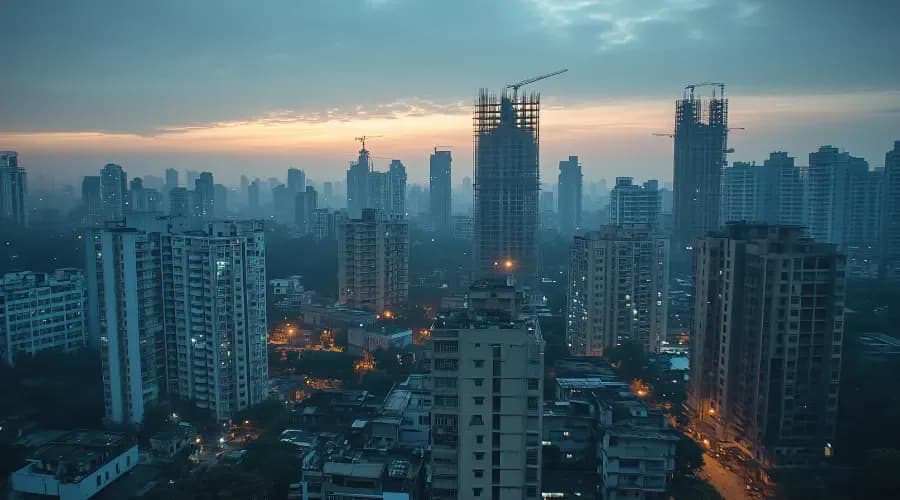
The Core Question: What Are You Actually Buying?
When buyers compare two suburbs, they usually start with price. That is fair. But price per square foot tells only half the story. The real question is: what does that price buy you in terms of space, location quality, liveability, and future growth?
Powai earned its reputation through the 2000s and early 2010s. The IT boom around Hiranandani, the lake views, the polished township feel — it all made Powai feel aspirational. And it was. But that era also drove prices to a level where many genuine end-users, particularly young professionals and growing families, started feeling priced out of comfortable, liveable configurations.
Chembur, meanwhile, was quietly transforming. Infrastructure investments, improved road networks, and a surge in quality residential development have repositioned it from a "second choice" suburb to one of Mumbai's most compelling mid-market destinations. The buyers who recognised this early have already seen meaningful appreciation.
A Ground-Level Look at Chembur's Apartment Market in 2026
The market for apartments in Chembur has matured considerably over the last three to four years. What you find today is a healthy mix of ready-to-move inventory and under-construction projects — with prices that still offer genuine value compared to Powai.
Here is what the 2026 landscape broadly looks like:
- 1 BHK configurations in Chembur typically range from approximately Rs. 90 lakh to Rs. 1.4 crore, depending on the project, floor, and amenities.
- 2 BHK units are largely between Rs. 1.4 crore and Rs. 2.2 crore, with premium projects reaching higher.
- In Powai, comparable configurations start noticeably higher — a 1 BHK rarely comes in under Rs. 1.2 crore, and 2 BHKs can easily cross Rs. 2.5 crore for a well-located project.
What that price gap means in practice: a buyer with a budget of Rs. 1.2 crore might get a compact 1 BHK in a mid-range Powai building, or a spacious, well-amenitised 1 BHK in a newer Chembur project with better carpet area and possibly a parking spot included. That is a meaningful difference in daily quality of life.
Rental yields in Chembur have also been strengthening, making it increasingly attractive for investors who want both appreciation potential and monthly income.
Connectivity: Where Chembur Quietly Wins
This is the argument that surprises most buyers who assume Powai has the connectivity edge. Chembur's infrastructure story has fundamentally changed.
The Eastern Freeway connects Chembur to South Mumbai in roughly 20 to 25 minutes — a commute that used to take well over an hour via the old route. The Sion-Panvel Highway gives direct access eastward. The Santacruz-Chembur Link Road (SCLR) connects to the Western suburbs and the airport corridor with ease. And the Monorail, while still maturing in ridership, adds another layer of public transport.
Powai's connectivity, by contrast, relies heavily on the Eastern Express Highway and internal roads that can get congested, particularly around the Hiranandani area. The absence of a suburban rail connection (the nearest station, Vikhroli, requires additional travel) means Powai residents often depend on personal vehicles or app-based cabs for most commutes.
For someone commuting to Bandra-Kurla Complex, the airport zone, or South Mumbai, Chembur's multi-modal access is genuinely superior.
Lifestyle, Green Spaces, and the Everyday Experience
Powai does have genuine lifestyle credentials. Galleria shopping, the lake jogging track, and a concentration of restaurants and cafes create a self-contained township feel. If you work in or near Powai, that insularity can be comfortable.
But Chembur holds its own — and in some respects, offers a more authentic, well-rounded Mumbai experience:
- RCF Colony and Diamond Garden give Chembur a greener, more relaxed character than you might expect from a central suburb.
- The Chembur-Govandi mangrove stretch nearby adds natural breathing space.
- A strong social infrastructure — good schools (many well-regarded institutions are within easy reach), hospitals, markets — means residents rarely need to travel far for daily needs.
- The dining and retail scene has evolved considerably, with both local favourites and newer establishments raising the quality of everyday options.
Families with children, in particular, often find Chembur's more established residential character reassuring. It feels like a neighbourhood, not just a development.
New Properties in Chembur: What Is Actually Coming Up
One of the strongest signals that a market is maturing is when reputed developers start committing to it. New properties in Chembur now include launches from some of Mumbai's most recognised builders, bringing with them improved design standards, amenity packages, and construction quality.
Understanding the 2026 market for apartments in Chembur means paying attention to what is actually being built, not just what is being advertised. Current and upcoming projects reflect a few clear trends:
- High-rise residential towers with 20 to 30 floors are becoming more common, offering better views and floor plans that maximise natural light.
- Amenity packages have caught up with premium suburban standards, with clubhouses, co-working zones, landscaped podiums, and EV charging stations increasingly becoming standard.
- Mixed-use developments combining retail and residential are adding convenience at the doorstep.
- Projects are being launched across a range of ticket sizes, meaning first-time buyers, upgraders, and investors all have options to evaluate.
If you are scouting projects in Chembur, the area to watch is the stretch along the Eastern Freeway access zone and the pockets near Chembur station. Both are seeing active development with strong long-term positioning.
How Chembur and Powai Compare Head-to-Head
| Parameter | Chembur | Powai |
| Average 1 BHK Price (2026) | Rs. 90L to 1.4 Cr | Rs. 1.2 Cr to 1.8 Cr |
| Average 2 BHK Price | Rs. 1.4 Cr to 2.2 Cr | Rs. 2 Cr to 3 Cr+ |
| Nearest Suburban Rail | Chembur Station (Harbour Line) | Vikhroli (10-15 min away) |
| Freeway Access | Eastern Freeway, SCLR, Sion-Panvel | Eastern Express Highway |
| Airport Proximity | 20-25 min via SCLR | 30-40 min |
| Green Spaces | RCF Colony, Diamond Garden | Powai Lake |
| Rental Yield (approx.) | 3.0 to 3.8% | 2.5 to 3.2% |
| New Development Activity | High | Moderate |
| Value for Budget | Strong | Moderate |
Who Should Seriously Consider a 1 BHK Flat for Sale in Chembur
Not every buyer profile maps to the same suburb. Here is a straightforward view of who Chembur tends to work best for:
You are a first-time buyer with a budget under Rs. 1.3 crore. Chembur gives you a realistic path to ownership with decent carpet area, quality construction, and genuine appreciation potential — without stretching to a configuration you will be uncomfortable holding for seven to ten years.
You commute to South Mumbai, BKC, or the airport zone. The Eastern Freeway and SCLR make Chembur one of the best-connected mid-Mumbai options for these corridors.
You want rental income. Chembur's rental yields are currently tracking higher than Powai's, and the pool of prospective tenants — professionals, couples, small families — is deep and growing.
You value a neighbourhood feel. If living in a self-contained township does not appeal to you, and you prefer the texture of an established residential suburb with schools, markets, and parks close by, Chembur delivers that better.
You are an investor with a five to ten year horizon. The suburb is mid-cycle in its appreciation curve. Much of Powai's price discovery has already happened. Chembur still has room to run.
That is not to say Powai lacks merit. If you work exclusively in the Powai-SEEPZ-Vikhroli belt and the township lifestyle genuinely suits you, and if budget is not a constraint, Powai remains a very liveable choice. But for the majority of buyers asking the Chembur vs Powai question, the honest answer is that Chembur gives you more for your money today, with better connectivity than most people expect, and a growth trajectory that is still in progress.
Latest Blogs
Blog
2026-10-04
The 2026 Buyer's Guide to Flats in Borivali: What to Check Before You Sign
Table of ContentsWhy Borivali Continues to Attract HomebuyersBorivali East vs Borivali West: Which Fits Your Lifestyle?Understanding Prices Before You...
Blog
2026-10-04
Wake Up to Nature Every Day: Why Flats in Borivali Offer a Greener Mumbai L...
Table of ContentsWhy Borivali Stands Apart in MumbaiThe Sanjay Gandhi National Park AdvantageWhy Flats in Borivali Appeal to Modern HomebuyersConnecti...
Blog
2026-10-04
Is Borivali Worth Buying Into in 2026? The Honest Investment Case for 2 BHK...
Table of ContentsWhy Borivali Is Still on the Investor's RadarWhat Makes 2 BHK in Borivali an Attractive SegmentBorivali East vs Borivali West: W...
Blog
2026-10-04
The Metro Effect on 2 BHK in Borivali: How New Lines Are Reshaping Property...
Table of ContentsWhy Metro Connectivity Is Changing Borivali Real EstateThe Metro Network Around Borivali in 2026How Metro Access Is Influencing Flats...

Blog
2026-09-25
Chembur Price Trends Decoded: What Current Rates Mean for Buyers Exploring ...
Table of ContentsChembur Property Prices in 2026: Where the Market StandsWhat Is Driving Chembur Property Prices?How Much Should You Pay for Flats in ...
Blog
2026-09-25
A Local’s Map of Chembur: Best Schools, Cafés & Green Escapes for Everyday ...
Table of ContentsWhy Chembur Feels Different When You Live HereSchools and Colleges Near Properties in ChemburCafés, Restaurants and Social Life in Ch...