Is the Mrinal Tai Gore Flyover Making Oshiwara a Better Place to Buy a Home?
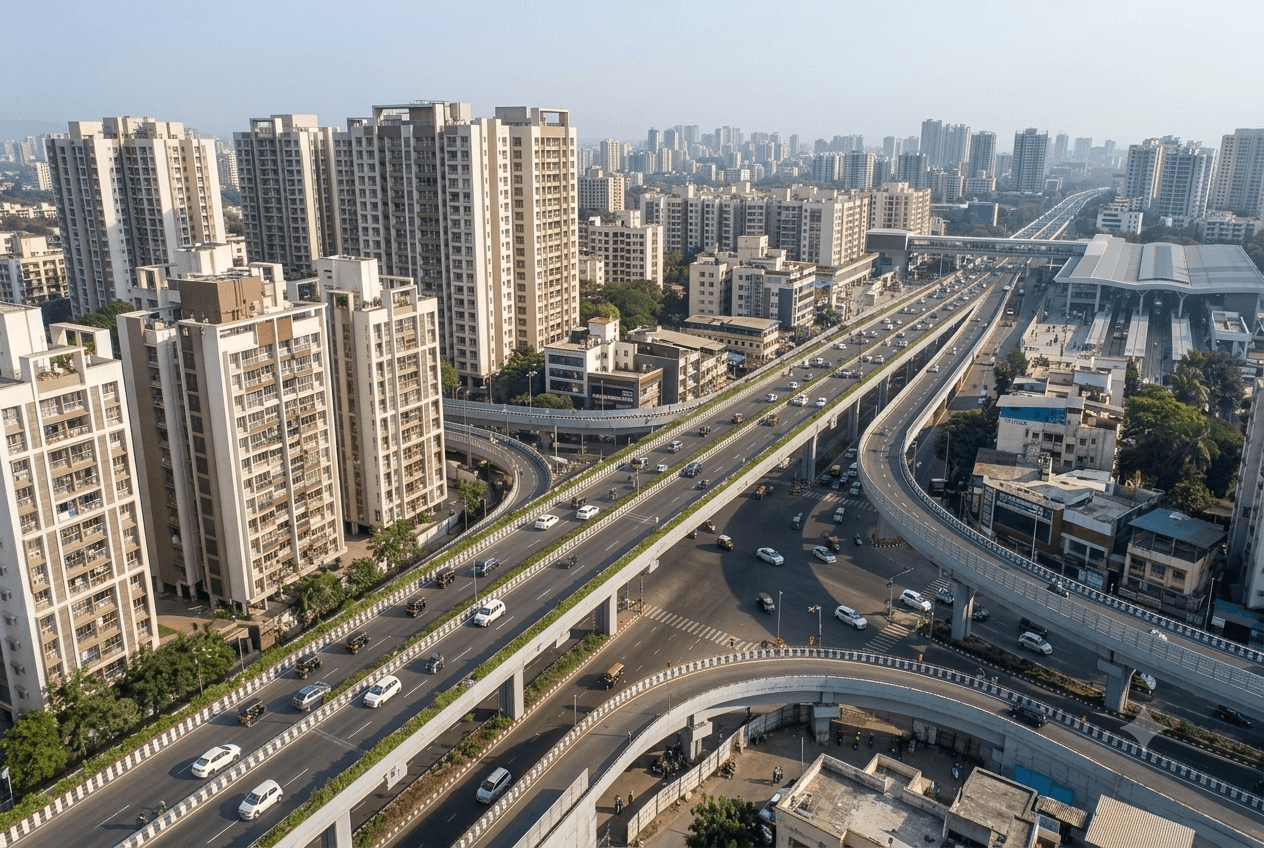
In Mumbai real estate, connectivity can change the way buyers look at an entire neighbourhood. A locality that once felt inconvenient because of traffic can become considerably more attractive when a new road, flyover or transit connection removes a daily bottleneck.
Oshiwara is a good example. Located between important western suburbs and surrounded by established residential and commercial areas, the neighbourhood already benefits from its proximity to major roads, rail connectivity and the wider Andheri-Goregaon corridor. With the Mrinal Tai Gore Flyover extension now operational, buyers have another infrastructure improvement to consider when evaluating the area.
The extension opened to the public on June 6, 2026, improving road connectivity between Goregaon and Ram Mandir and strengthening access towards the Oshiwara side of the western suburbs. For people who spend hours commuting every week, more direct road connectivity can influence where they choose to live.
For a property buyer, however, better connectivity should not automatically mean "buy now." The smarter approach is to understand what has actually improved, which locations benefit most and whether the property itself justifies its price.
The Mrinal Tai Gore Flyover Extension: What Has Changed?
The extension of the Mrinal Tai Gore Flyover opened to the public on June 6, 2026. Developed by the Brihanmumbai Municipal Corporation, the approximately 750-metre, four-lane extension was designed to improve traffic movement between Ram Mandir and Goregaon.
The project was initially estimated at around ₹209 crore, while the final cost reportedly reached approximately ₹248 crore following delays and design changes.
For residents and commuters, the significance of the project is not simply its length or cost. It is the additional connectivity it provides across an important part of Mumbai's western suburbs.
The extension includes two approach arms of roughly 390 metres each and provides an additional route that helps motorists bypass several congested signals along SV Road. This is particularly relevant for people travelling through Goregaon, Ram Mandir, Oshiwara and surrounding western suburbs.
The project also underwent changes during construction. Work faced disruption during the Covid-19 period, while concerns around access to nearby crematoriums and burial grounds required modifications to the original design.
The completed structure includes several safety and neighbourhood-focused features, including:
- Pedestrian pathways
- Improved signage
- Street lighting
- Noise barriers near residential buildings
- An additional underpass following design modifications
These details matter because infrastructure should be evaluated not only by how quickly vehicles move, but also by how it affects the people living around it.
How the Completed Flyover Improves Oshiwara Connectivity
One of the key advantages for Oshiwara is the improved east-west movement corridor created by the completed infrastructure.
The new connection links the Western Express Highway side of Goregaon with Ram Mandir Road and Relief Road in the Oshiwara area. This provides commuters with an additional route through a part of Mumbai where traffic congestion has historically been a major concern.
Consider a typical weekday commuter living in Oshiwara and travelling towards Goregaon East or the Western Express Highway. Earlier, congestion at multiple intersections could turn a relatively short road distance into a frustrating commute.
With the flyover extension now operational, motorists have an additional road connection that can help distribute traffic and make movement through key sections more efficient. Actual travel times, however, will continue to depend on traffic volumes, peak-hour conditions and how motorists use the new route.
| Connectivity factor | Earlier challenge | Impact of the completed extension |
| SV Road movement | Multiple traffic bottlenecks | Additional elevated road connectivity |
| Ram Mandir to Goregaon | Congestion at intersections | More direct road movement |
| Oshiwara access | Dependence on busy local routes | Additional east-west route |
| WEH connectivity | Traffic-related delays | Improved access from western suburbs |
| Daily commuting | Unpredictable travel conditions | Greater route flexibility |
The flyover does not eliminate congestion across the western suburbs, but its operation adds capacity to an existing road network.
From a long-term residential perspective, that additional connectivity is a positive factor for Oshiwara.
What Better Connectivity Means for Flats in Oshiwara
For property buyers, connectivity is not just about saving a few minutes on a commute. It can influence rental demand, resale interest and the overall attractiveness of a neighbourhood.
When infrastructure improves, three groups tend to pay attention: existing homeowners, people looking for rental homes and buyers considering long-term investments.
For example, a professional working in Goregaon, Andheri, BKC or nearby commercial hubs may find Oshiwara more convenient when daily road travel becomes easier. Similarly, a family that values access to schools, workplaces, shopping and entertainment may see improved connectivity as a meaningful lifestyle advantage.
This does not mean every property in Oshiwara will automatically appreciate because of the flyover. Property values are influenced by several factors, including:
- Exact micro-location
- Distance from major roads and transit
- Building quality and age
- Developer reputation
- Apartment configuration
- Amenities
- Parking availability
- Maintenance costs
- Upcoming infrastructure
- Supply of competing properties
The completed flyover should therefore be viewed as one positive factor within a larger real estate decision.
Why Homebuyers Are Looking at Apartments in Oshiwara
Oshiwara has developed into a residential destination with a mix of established buildings, newer developments and access to commercial and lifestyle infrastructure.
One of its biggest advantages is location. Residents can access neighbouring areas such as Andheri West, Goregaon West and Jogeshwari while remaining connected to the broader western suburbs.
For many buyers, the appeal is also about lifestyle convenience. A home is not just four walls. The surrounding environment determines how easily you can reach work, schools, restaurants, healthcare facilities, shopping areas and public transport.
This is particularly relevant for families upgrading from a smaller home.
A buyer comparing a compact apartment in a more expensive micro-market with a larger home in Oshiwara may find that the latter provides a better balance between space and connectivity.
Projects such as Paradigm Alaya also reflect the area's evolution toward larger, planned residential communities. Spread across approximately 10 acres, the development combines residential living with a substantial amenity offering, demonstrating how Oshiwara is increasingly being positioned as more than simply a transit location.
With the Mrinal Tai Gore Flyover extension now operational, road connectivity becomes another factor supporting the area's residential appeal.
Is a 3 BHK in Oshiwara Worth Considering?
A 3 BHK in Oshiwara can make sense for buyers who are planning to stay in the property for several years rather than treating it as a short-term purchase.
The extra bedroom can serve different purposes depending on the family. It could be a children's room, guest bedroom, home office or simply additional storage and living space.
For a family with two children or professionals working partly from home, the additional space can make a meaningful difference to everyday life.
However, buyers should avoid choosing a larger configuration purely because it appears to offer better investment potential.
Before purchasing a 3 BHK in Oshiwara, ask:
- Does the carpet area actually meet your family's requirements?
- Is the floor plan efficient or is too much space lost to passages?
- How does the total purchase price compare with similar homes nearby?
- What are the monthly maintenance charges?
- Does the building offer adequate parking and visitor parking?
- How easily can you access public transport and major roads?
- Does the property benefit from the area's improved road connectivity without being exposed to excessive traffic noise?
A larger apartment at the wrong price is not necessarily a better investment than a well-located 2 BHK.
What Buyers Should Check Before Purchasing Flats in Oshiwara
Infrastructure improvements can make a locality more attractive, but experienced buyers know that the property itself must still pass a basic due diligence test.
When evaluating flats in Oshiwara, look beyond the brochure and inspect the actual property and surroundings.
1. Visit During Peak Traffic Hours
Visit the property in the morning and evening. A road that looks quiet at 2 PM can tell a very different story at 7 PM.
This is particularly important for properties located close to major roads or newly improved traffic corridors.
2. Check Noise Levels
Improved connectivity can also mean increased traffic movement in certain pockets. If the property is close to a major road or flyover, check whether the apartment has adequate acoustic insulation and whether the bedroom placement works for you.
3. Compare Carpet Area
Do not compare properties only on the advertised configuration. Compare the RERA carpet area, floor plan and usable space.
A well-designed 2 BHK can sometimes provide better everyday usability than a poorly planned larger apartment.
4. Study the Micro-Market
"Oshiwara" covers more than one residential pocket. Two buildings carrying the same locality name can have very different access, surroundings and pricing.
Check the property's actual distance from major roads, public transport, schools, healthcare facilities, retail areas and employment hubs.
5. Check the Building, Not Just the Apartment
Review the age of the building, maintenance standards, lifts, parking, water supply, fire safety provisions and redevelopment potential where applicable.
The infrastructure around a property can improve, but the condition of the building remains equally important.
6. Think About Your Exit Strategy
Even if you are buying a home for personal use, consider future resale or rental demand.
Properties with good connectivity, sensible layouts and strong neighbourhood infrastructure generally have a broader pool of potential buyers and tenants.
The completed Mrinal Tai Gore Flyover can support this connectivity advantage, but it should be considered alongside the property's individual strengths and weaknesses.
The Bigger Picture for Oshiwara Real Estate
Mumbai's western suburbs are already mature markets, which means infrastructure improvements often have a different impact here compared with emerging peripheral locations.
The opportunity is not necessarily about suddenly transforming Oshiwara into a new suburb. Instead, it is about improving the efficiency of an already established residential ecosystem.
The operational Mrinal Tai Gore Flyover extension strengthens the road connection between Oshiwara, Goregaon and Ram Mandir and provides an additional route towards the Western Express Highway side of the western suburbs.
Over time, this can support the area's attractiveness among homebuyers and tenants who place a high value on commute convenience.
For investors, however, patience remains important.
Infrastructure-led appreciation rarely happens in a perfectly straight line. Market sentiment, interest rates, new housing supply and broader Mumbai demand will continue to influence prices.
The more useful question is not, "Will the flyover increase property prices?"
It is, "Does this infrastructure make the locality more useful and desirable for the people who will actually live there?"
For Oshiwara, the completed flyover is a meaningful addition to the area's connectivity story.
For buyers considering the area in 2026, the infrastructure improvement is one more reason to evaluate the neighbourhood. But the strongest purchase decision will combine connectivity with the right building, right configuration, right price and long-term suitability.
That is ultimately what makes a property purchase worthwhile.
Latest Blogs
Blog
Paradigm Realty
2026-10-18
Real Estate in Bandra: Property Prices, Connectivity, Lifestyle and Investm...
Table of ContentsWhy Bandra Remains One of Mumbai’s Most Desirable Residential LocationsProperty Prices in Bandra in 20264BHK Flat in Bandra: What Sho...
Blog
Paradigm Realty
2026-10-18
Living in Shimpoli, Borivali West: A Practical Guide to Flats, Connectivity...
Table of ContentsWhy Consider Living in Shimpoli, Borivali West?Everyday Conveniences That Make Life EasierConnectivity and Daily Commutes from Shimpo...
Blog
Paradigm Realty
2026-10-18
Sea Facing Apartments in Bandra: 7 Reasons to Invest in Ocean View Luxury H...
Table of ContentsWhy Sea Facing Apartments in Bandra Remain in Demand7 Benefits of Living in Ocean View Flats in BandraWhat Makes Bandra West a Premiu...
Blog
Paradigm Realty
2026-10-18
Top Redevelopment Builders in Mumbai: 10 Things Every Housing Society Must ...
Table of ContentsWhy Choosing the Right Redevelopment Builder MattersWhat Makes the Top Redevelopment Builders in Mumbai Stand Out?10 Things to Check ...

Blog
Paradigm Realty
2026-10-18
Beyond Extra Carpet Area: How to Choose the Right Redevelopment Builder in ...
Table of ContentsWhy Mumbai Housing Societies Need the Right Redevelopment PartnerHow to Evaluate the Top Redevelopment Builders in MumbaiUnderstandin...
Blog
Paradigm Realty
2026-10-18
How Infrastructure Development Is Shaping Real Estate Growth in Bandra: Is ...
Table of ContentsIntroduction: Why Infrastructure Matters in BandraHow Major Infrastructure Projects Are Transforming BandraHow Connectivity Influence...