The Eastern Freeway Effect: How Better Connectivity Put Projects in Chembur on the Map
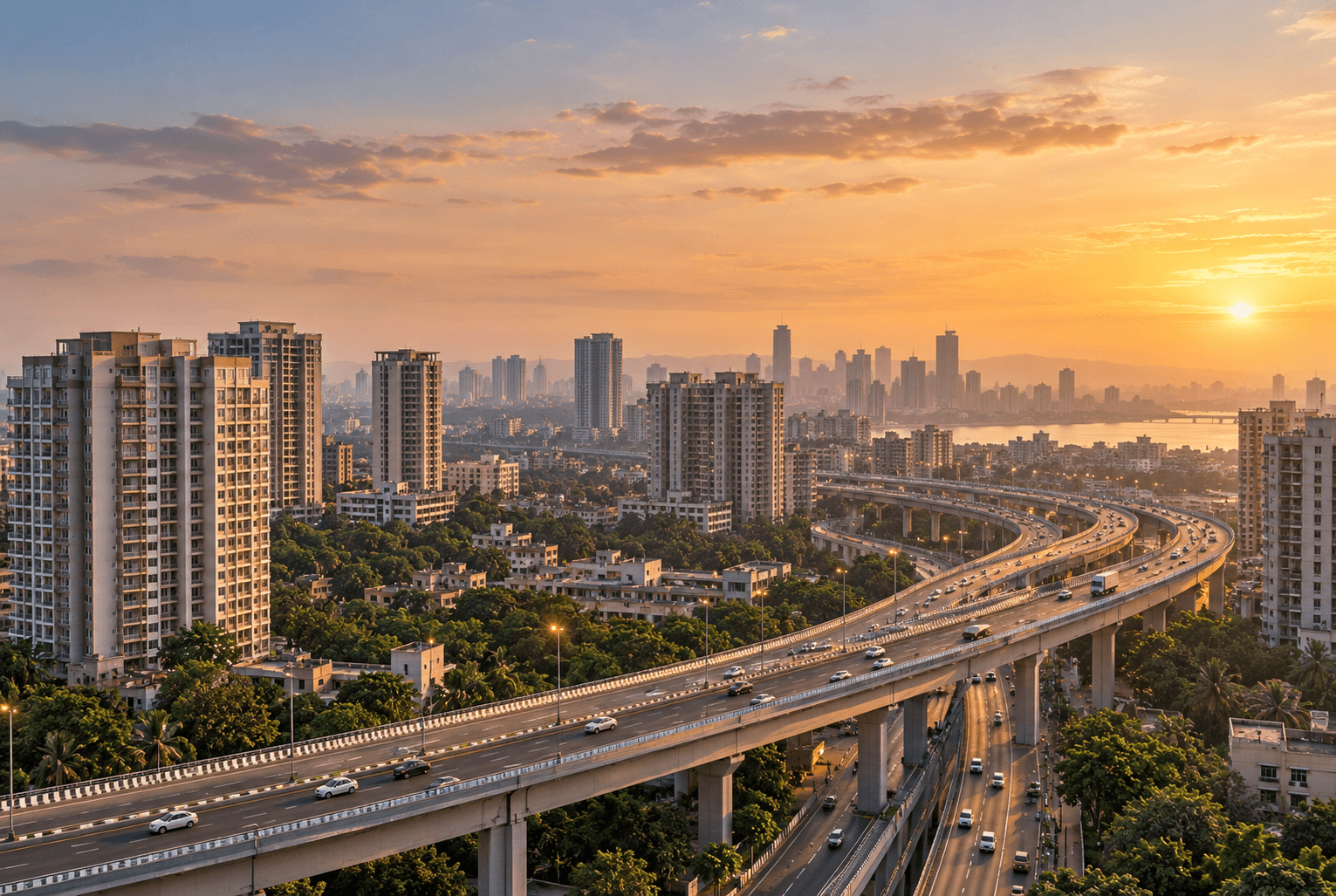
Table of Contents
- Why the Eastern Freeway Changed Chembur's Real Estate Story
- What Is the Eastern Freeway and Why Does It Matter for Chembur?
- How Much Time Can You Save From Chembur to South Mumbai?
- How the Eastern Freeway Changed Demand for Projects in Chembur
- Why Chembur Works for Buyers Looking for a 2 BHK Flat for Sale in Chembur
- What Should You Check Before Buying Flats in Chembur?
- Why 71 Midtown Fits Into Chembur's New Residential Story
- What the Eastern Freeway Could Mean for Chembur's Future
- Frequently Asked Questions
Why the Eastern Freeway Changed Chembur's Real Estate Story
For years, Chembur had many of the qualities Mumbai homebuyers wanted: established schools, hospitals, open spaces, railway connectivity, social infrastructure and relatively generous residential layouts. The challenge was getting to the city's major employment districts without spending a large part of the day in traffic.
The Eastern Freeway changed that equation.
When the controlled-access corridor opened in phases between 2013 and 2014, the road journey between Chembur and South Mumbai became considerably more predictable. A commute that could take close to an hour during peak traffic could, depending on the destination and traffic conditions, come down to roughly 25 minutes.
That difference matters in real estate. Buyers do not only purchase a home. They purchase the daily life that comes with its location.
For someone working in Fort, CST, Masjid, Parel or other parts of South Mumbai, Chembur suddenly became a much more practical residential choice. The same connectivity advantage also strengthened the suburb's appeal to professionals travelling towards BKC, Navi Mumbai and other parts of Mumbai.
What Is the Eastern Freeway and Why Does It Matter for Chembur?
The Eastern Freeway, officially known as the Vilasrao Deshmukh Eastern Freeway, is a 16.8 km controlled-access corridor connecting South Mumbai with the Eastern Express Highway at Chembur.
Its importance is not simply the distance it covers. The bigger advantage is that it removes multiple traffic signals and busy road stretches from a crucial part of the journey. For a regular commuter, that can make travel more consistent and significantly reduce the stress associated with peak-hour driving.
Chembur also benefits from its wider network of connecting roads. The Santa Cruz-Chembur Link Road improves access towards BKC and the western suburbs, while the Mumbai Trans Harbour Link has strengthened the broader connection towards Navi Mumbai.
This creates something that is particularly valuable in Mumbai: multi-directional connectivity.
Instead of being dependent on a single employment corridor, residents can travel relatively efficiently towards:
- South Mumbai and Fort
- BKC and surrounding commercial districts
- Navi Mumbai
- Eastern and Central Mumbai
- Major highways connecting to the wider metropolitan region
For a homebuyer, this connectivity can be just as important as the amenities within the residential project itself.
How Much Time Can You Save From Chembur to South Mumbai?
The exact commute naturally depends on the time of day, starting point, destination and traffic. However, the difference created by the Eastern Freeway is significant enough to have changed how many people perceive Chembur.
Route | Earlier commute pattern | With improved connectivity |
| Chembur to CST/Fort | Often around 45 to 60+ minutes during peak traffic | Approximately 20 to 30 minutes in favourable conditions |
| Chembur to BKC | Around 40 to 45 minutes depending on traffic | Approximately 20 to 30 minutes depending on route and traffic |
| Chembur to Navi Mumbai | Often 60 minutes or more | Significantly reduced with the Eastern Freeway and MTHL |
| Chembur to other eastern suburbs | Dependent on congested arterial roads | Improved through the wider eastern road network |
The important point is not that every journey will take exactly 25 minutes. It will not.
The real advantage is that Chembur became much closer in practical commuting terms to employment hubs that once felt inconvenient from a residential perspective.
How the Eastern Freeway Changed Demand for Projects in Chembur
Infrastructure does not automatically create a successful real estate market. What it does is remove one of the biggest objections buyers may have about a location.
That is exactly what happened in Chembur.
As connectivity improved, the buyer profile expanded beyond people who already lived or worked nearby. Professionals working in South Mumbai and BKC could now consider Chembur without treating the commute as a major compromise.
This helped create demand for better-designed residential developments, larger homes and lifestyle-focused communities.
The evolution is visible in the way buyers evaluate projects in Chembur today. Instead of asking only, "How much does a square foot cost?", buyers increasingly ask:
- How long will my daily commute actually take?
- How easily can I reach my workplace?
- What are the schools and hospitals nearby?
- Is the neighbourhood established?
- Does the project offer meaningful open and amenity spaces?
- How well connected will the property remain as Mumbai's infrastructure expands?
This is a healthier way of evaluating real estate because connectivity, liveability and the quality of the development all contribute to long-term usability.
Why Chembur Works for Buyers Looking for a 2 BHK Flat for Sale in Chembur
The appeal of a 2 BHK flat for sale in Chembur is closely connected to the suburb's balance between location and liveability.
A buyer may be looking for a home that is large enough for a family, close enough to major employment centres and located in a neighbourhood with established everyday infrastructure. Chembur can address these requirements without requiring the buyer to move deep into the suburbs.
The neighbourhood also has an advantage that is difficult to recreate in newer parts of Mumbai: an established ecosystem.
Residents have access to schools, healthcare facilities, restaurants, retail, recreational spaces and public transport within the broader Chembur catchment. For families, this can make a significant difference to daily convenience.
There is also a practical distinction between buying purely for connectivity and buying in a location that people actually want to live in. Chembur's appeal comes from having both.
What Should You Check Before Buying Flats in Chembur?
A common mistake buyers make is assuming that every property in the same suburb offers the same connectivity advantage.
It does not.
Two projects may both have a Chembur address but have very different driving times to the Eastern Freeway, railway station, major roads or employment hubs.
Before shortlisting flats in Chembur, look at the following:
1. Actual road distance:
Do not rely only on the distance shown in a straight line. Check the driving route and typical travel time during your actual commuting hours.
2. Access to major connectors:
Check how easily the project connects to the Eastern Freeway, SCLR and other major routes.
3. Everyday infrastructure:
A home should work beyond the morning commute. Look at schools, hospitals, grocery stores, restaurants and other essentials around the project.
4. Project planning:
Examine the carpet area, floor plans, open spaces, amenities, parking and overall layout rather than evaluating a property only by its headline price.
5. Developer track record:
Review the developer's previous projects, construction quality, delivery record and regulatory information.
6. MahaRERA details:
Always verify the project's registration, approved information and possession-related details on the official MahaRERA platform before making a financial commitment.
These checks help separate a genuinely well-connected home from one that simply uses "Chembur" as a location label.
Why 71 Midtown Fits Into Chembur's New Residential Story
The changing profile of Chembur is also reflected in the kind of residential developments buyers are evaluating today.
71 Midtown by Paradigm Realty is positioned within this evolving Chembur market, offering residences designed around the needs of buyers who want connectivity without giving up the advantages of an established neighbourhood.
Its location in Chembur puts the project within the wider network of roads and social infrastructure that has helped the suburb strengthen its residential appeal.
For a buyer considering the project, the larger story is important. A residential development is not an isolated building. Its value is also connected to the neighbourhood around it, the accessibility of major employment hubs and the infrastructure that supports everyday life.
This is particularly relevant for professionals and families comparing Chembur with other established Mumbai locations. The question is no longer simply whether Chembur is connected. It is how effectively a specific project uses that connectivity.
What the Eastern Freeway Could Mean for Chembur's Future
The Eastern Freeway's impact should be viewed as part of a larger infrastructure story rather than as a standalone road project.
The connection towards Navi Mumbai through the Mumbai Trans Harbour Link has added another dimension to eastern Mumbai's accessibility. Further road and transit improvements across the metropolitan region could strengthen Chembur's role as a central residential location.
However, buyers should be careful with infrastructure-led projections.
An upcoming road or transit project can improve accessibility, but its impact depends on timelines, execution and actual usage once completed. It is therefore better to treat future infrastructure as a potential advantage rather than building an entire property-buying decision around an announced project.
What Chembur already has is more important: an established neighbourhood, strong connectivity, mature social infrastructure and access to multiple parts of Mumbai.
That combination gives the suburb a practical foundation for continued residential demand.
For today's buyer, this is ultimately the Eastern Freeway effect. It did not simply make one journey faster. It changed the radius within which people were willing to search for a home.
Chembur moved from being a location that many buyers considered primarily because of familiarity and value to one that could compete for attention based on connectivity, lifestyle and residential quality.
That shift is why the story of projects in Chembur is now closely tied to the story of Mumbai's infrastructure itself.
Latest Blogs
Blog
2026-09-25
A Local’s Map of Chembur: Best Schools, Cafés & Green Escapes for Everyday ...
Table of ContentsWhy Chembur Feels Different When You Live HereSchools and Colleges Near Properties in ChemburCafés, Restaurants and Social Life in Ch...

Blog
2026-09-25
Chembur Price Trends Decoded: What Current Rates Mean for Buyers Exploring ...
Table of ContentsChembur Property Prices in 2026: Where the Market StandsWhat Is Driving Chembur Property Prices?How Much Should You Pay for Flats in ...
Blog
2026-09-25
The Eastern Freeway Effect: How Better Connectivity Put Projects in Chembur...
Table of ContentsWhy the Eastern Freeway Changed Chembur's Real Estate StoryWhat Is the Eastern Freeway and Why Does It Matter for Chembur?How Much Ti...
Blog
2026-08-21
Is the Mrinal Tai Gore Flyover Making Oshiwara a Better Place to Buy a Home...
In Mumbai real estate, connectivity can change the way buyers look at an entire neighbourhood. A locality that once felt inconvenient because of traff...
Blog
2026-08-21
Why Chembur Is Mumbai’s Connectivity Sweet Spot in 2026: BKC, South Mumbai ...
Why 2 BHK Apartments in Chembur Are Drawing Serious Buyer InterestBuying a home in Mumbai often means making a compromise. You may get a larger home b...
Blog
2026-08-20
Why the New Goregaon-Oshiwara Flyover Made Buying Flats in Oshiwara a Smart...
If you have spent any time stuck between Ram Mandir and Goregaon during peak hours, you already know the pain. Thirty minutes to cover a stretch you c...