The Metro Effect on 2 BHK in Borivali: How New Lines Are Reshaping Property Prices in 2026
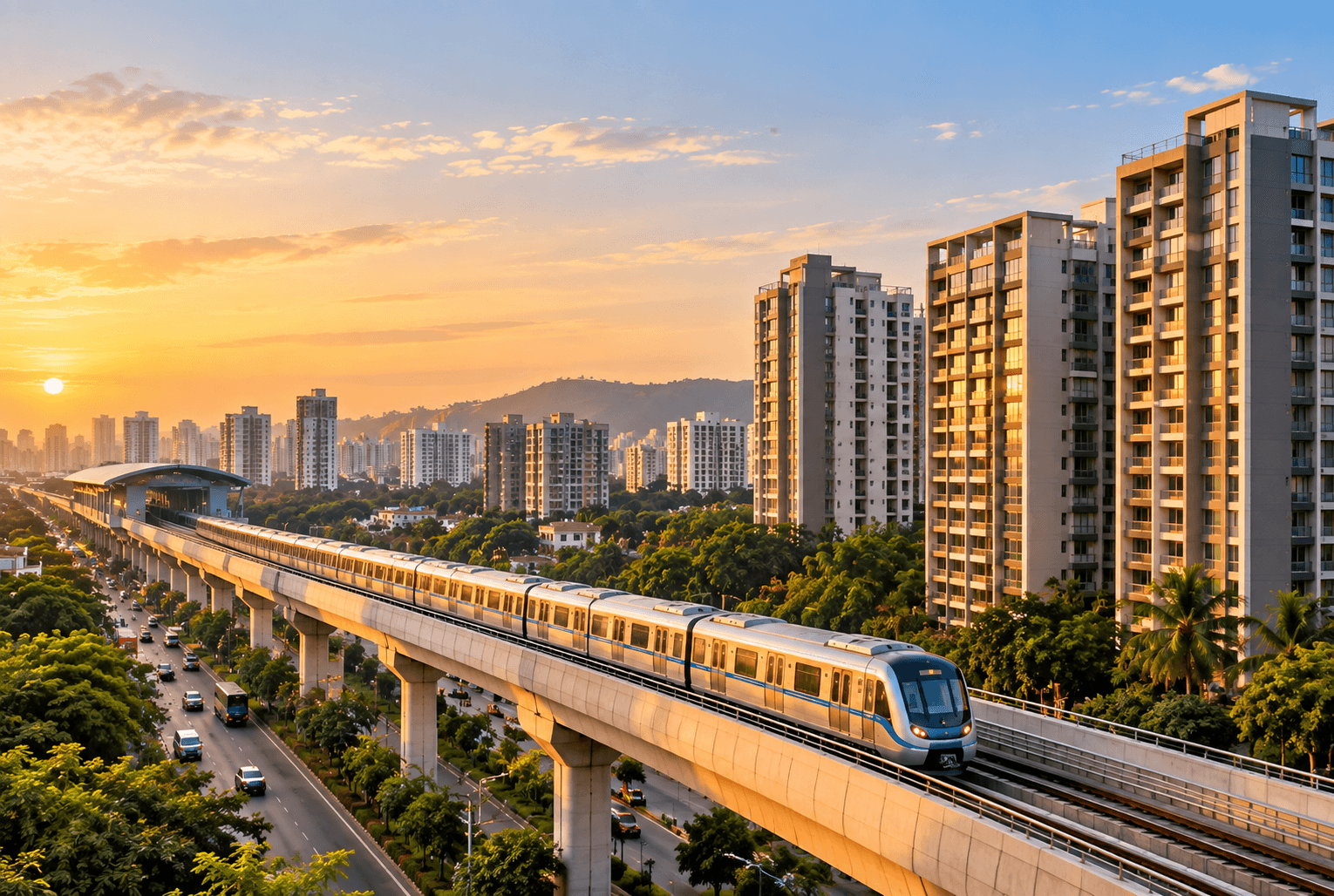
Table of Contents
- Why Metro Connectivity Is Changing Borivali Real Estate
- The Metro Network Around Borivali in 2026
- How Metro Access Is Influencing Flats in Borivali
- Why 2 BHK Homes Are at the Centre of the Demand
- Borivali East vs Borivali West: Where Is the Metro Effect Stronger?
- How Line 9 Could Change the Borivali-Dahisar-Mira Road Corridor
- What Buyers Should Check Before Paying a Metro Premium
- How New Residential Projects Are Responding to Changing Buyer Demand
- What the Metro Effect Means for Borivali Property Prices
- FAQs
Why Metro Connectivity Is Changing Borivali Real Estate
Mumbai has always been a city where location is measured in minutes rather than kilometres. A home that looks affordable on paper can become considerably less attractive if the daily commute involves unpredictable traffic, multiple changes of transport or long waits during peak hours.
That is why metro connectivity is becoming an increasingly important factor in the way buyers evaluate flats in Borivali.
Borivali already had a major advantage through its Western Railway connectivity and its position along the Western Express Highway. The expansion of the metro network adds another layer to that connectivity, giving residents more options for travelling through the western suburbs and beyond.
The effect on property, however, is not as simple as saying that every home near a metro station will automatically become more expensive.
Metro infrastructure changes the fundamentals of a neighbourhood in several ways:
- It can make daily travel more predictable.
- It can expand the practical catchment area for employment hubs.
- It can improve rental appeal among commuters.
- It can make previously less convenient pockets easier to consider.
- It can increase buyer attention around stations and interchange points.
- It can influence redevelopment and new residential supply.
Borivali's property market has already demonstrated that micro-location matters. Prices can differ considerably between Borivali East and Borivali West and even between two buildings within the same neighbourhood.
The important point for buyers is that metro connectivity should be considered alongside the existing price of the neighbourhood, not separately from it.
A closer look at the Metro Effect on 2 BHK in Borivali
For an average homebuyer, the metro effect is less about speculation and more about everyday convenience.
Consider two similar 2 BHK homes. One requires a 15-minute road journey to reach a metro station, while the other is within a comfortable walking or short feeder-ride distance. Even if the second property costs more, a buyer who commutes regularly may consider the additional cost worthwhile because the location saves time every day.
That difference can eventually influence rental demand and resale interest as well.
The metro therefore becomes part of the property's practical value proposition.
The Metro Network Around Borivali in 2026
Borivali's metro story is not dependent on a single line.
Metro Line 2A has strengthened connectivity across the western suburban corridor, serving areas including Borivali West, Kandivali, Malad and Andheri West. This has given residents another public transport option alongside the existing suburban railway network.
Metro Line 7 has strengthened the eastern side of the western suburban corridor, connecting Dahisar East with the broader metro network and improving access towards Kandivali, Malad, Goregaon and Andheri East.
Then comes Metro Line 9, which is particularly relevant to the northern part of this corridor.
The first operational section of Metro Line 9 connects Dahisar East towards Kashigaon, strengthening the connection between the Mumbai suburban network and the Mira-Bhayander region. The wider corridor is intended to improve movement between Dahisar, Mira Road and Bhayander while integrating with existing metro and railway infrastructure.
This creates an important shift.
Borivali is no longer simply a destination at the northern end of Mumbai's western suburban residential belt. It increasingly functions as part of a connected metropolitan corridor involving Borivali, Dahisar, Mira Road and Bhayandar.
That broader connectivity matters because property demand often follows accessibility.
How Metro Access Is Influencing Flats in Borivali
There are three different ways metro connectivity can affect residential property.
The first is buyer demand.
A commuter may previously have limited their home search to locations immediately surrounding their workplace. Better public transport can expand that search radius. Someone working in Andheri, Goregaon or another western suburban employment zone may now consider a wider selection of homes if the commute becomes manageable.
The second is rental demand.
Tenants often prioritise convenience more than ownership buyers do. A professional renting a home for two or three years may be willing to pay a premium for a property that makes the daily journey easier.
The third is resale liquidity.
A home in a recognisable, well-connected location can potentially appeal to a broader buyer pool when the owner decides to sell. However, this should not be interpreted as a guarantee of appreciation. Property prices remain dependent on supply, project quality, financing conditions, economic cycles and the specific location.
For buyers evaluating a property, the practical metro checklist is therefore:
Factor | What to examine |
| Distance | Actual walking or driving distance to the station |
| Route | Whether the station connects to your regular destinations |
| Interchange | Availability of connections to other metro or rail corridors |
| Last-mile access | Autos, buses, walking routes and feeder options |
| Traffic | Road congestion between the property and station |
| Noise | Whether the property directly faces an elevated metro corridor |
| Future construction | Any proposed infrastructure near the building |
| Price premium | Whether the property is already priced for expected connectivity |
This last point is particularly important.
A metro station can improve a location, but if a property has already been aggressively priced because of the expected benefit, the buyer needs to assess whether the premium makes financial sense.
Why 2 BHK Homes Are at the Centre of the Demand
The 2 BHK in Borivali remains an important configuration because it sits between affordability and usable family space.
For many Mumbai households, a 2 BHK can accommodate a couple, children, a work-from-home setup or visiting parents without the price jump associated with larger configurations.
Metro connectivity strengthens the appeal of this format because the buyer is not purchasing only additional space. They are purchasing a combination of space and access.
A typical buyer might compare:
Option A: A larger 2 BHK farther from a station at a lower price.
Option B: A slightly smaller 2 BHK closer to a metro station at a higher price.
The right choice depends on the household's priorities. A buyer who travels daily may place greater value on accessibility, while someone who works locally may prioritise carpet area, parking, building quality or amenities.
That is why buyers looking at 2 BHK flats in Borivali should avoid judging a property solely by its headline price.
Instead, compare:
- Carpet area
- Effective price per sq ft
- Floor and orientation
- Parking
- Building age
- Maintenance costs
- Metro accessibility
- Railway accessibility
- Possession status
- Redevelopment potential
- Developer and project track record
Borivali East vs Borivali West: Where Is the Metro Effect Stronger?
The metro has different implications for Borivali East and Borivali West because the two sides already have different characteristics.
Borivali West has traditionally benefited from established residential neighbourhoods, schools, retail, social infrastructure and access to Borivali railway station. Metro Line 2A adds another public transport option to this established ecosystem.
Borivali East, meanwhile, has benefited from its relationship with the Western Express Highway, railway connectivity and the Metro Line 7 corridor.
The important thing for a buyer is not simply deciding which side is better.
Instead, ask:
Where does your daily travel begin and end?
If your work is concentrated around western suburban employment hubs, metro connections may matter more than the difference between East and West.
If your lifestyle revolves around established West-side amenities, railway access and local social infrastructure, a property near those conveniences may justify its pricing even without being immediately next to a metro station.
Connectivity should therefore be measured door-to-door rather than station-to-station.
A property advertised as being "near the metro" could still require a lengthy walk or road journey. Always visit the location and experience the route yourself.
How Line 9 Could Change the Borivali-Dahisar-Mira Road Corridor
Metro Line 9 is particularly interesting because its influence extends beyond Borivali.
The corridor is designed to improve connectivity between Dahisar and Mira-Bhayander while integrating with the existing suburban transport network.
This has implications for the broader property market.
Improved connectivity can make areas beyond Borivali more accessible to people working in Mumbai's established employment centres. At the same time, Borivali and Dahisar can benefit from becoming better-connected gateways between Mumbai and the northern suburbs.
The impact is unlikely to be identical everywhere.
Properties closest to stations may experience stronger direct demand, while areas farther away may benefit more gradually through improved road access, feeder transport and changing perceptions of the wider neighbourhood.
For buyers considering upcoming residential projects in Borivali, this distinction is important.
Infrastructure should be evaluated based on what is already operational, what is under construction and what remains only a proposal.
Do not pay today's price for tomorrow's infrastructure without checking the actual project status.
What Buyers Should Check Before Paying a Metro Premium
One of the most common mistakes in infrastructure-led property buying is assuming that proximity automatically equals value.
It does not.
A home directly next to a station may have excellent accessibility, but it could also face traffic, noise, commercial activity or higher pedestrian movement.
A property 700 metres away might offer a better residential environment while remaining sufficiently close to benefit from the metro.
Before buying, physically visit the property at different times.
Check the route during:
- Morning peak hours
- Evening peak hours
- Weekends
- Monsoon conditions
- After dark
Also measure the actual door-to-station journey, not the distance advertised by a project brochure.
A 600-metre station may be less convenient than an 800-metre station if the route involves a busy road crossing, poor footpaths or difficult access.
Another mistake is assuming every metro-connected property will appreciate at the same pace.
Property appreciation can be affected by:
- New supply entering the market
- Redevelopment activity
- Interest rates
- Local infrastructure
- Rental demand
- Project quality
- Developer reputation
- Road accessibility
- Supply of competing homes
The metro is one factor in the equation, not the entire equation.
How New Residential Projects Are Responding to Changing Buyer Demand
Metro connectivity is also changing what buyers expect from residential projects.
The new generation of developments in Borivali is increasingly positioned around a broader lifestyle proposition rather than simply apartment size.
Newer high-rise developments are combining multiple apartment configurations with podium amenities, fitness spaces, indoor recreation, landscaped areas and elevated leisure spaces.
For example, contemporary developments such as Paradigm Anantaara are positioned around larger-format community living, with 2, 3 and 4 BHK residences, a 42-storey tower and amenities spread across podium and sky-level spaces.
This reflects a broader shift in buyer expectations.
When connectivity improves, residents become more conscious of how they spend the time they save. A shorter commute creates more value for amenities, recreation, family time and work-from-home flexibility.
That is why a modern home search increasingly involves two questions:
How easily can I get out of the neighbourhood?
How comfortably can I live when I am back home?
The best-connected residential markets increasingly need to answer both.
What the Metro Effect Means for Borivali Property Prices
The bigger story is not that the metro will create an identical price increase across Borivali.
It is that connectivity is changing the way the market assigns value to different locations.
A property close to an operational station, with good last-mile access and strong residential fundamentals, can become more attractive to both end-users and tenants.
Meanwhile, areas benefiting from future infrastructure may see increasing buyer attention before the infrastructure is fully delivered.
That creates both opportunity and risk.
For a buyer looking at Flats in Borivali, the most useful approach is to separate three factors:
1. Current connectivity
What transport options can you actually use today?
2. Confirmed infrastructure
Which metro extensions or stations have reached meaningful construction or commissioning milestones?
3. Future expectations
Which improvements are still dependent on approvals, construction schedules or other uncertainties?
This framework prevents a common real estate mistake: paying a premium entirely for an infrastructure promise.
Borivali's underlying fundamentals remain important regardless of the metro. Its railway network, established social infrastructure, residential depth, access to major roads and proximity to large employment corridors all contribute to its appeal.
The metro adds another layer to that story.
For someone searching for a 2 BHK in Borivali, the result is a market where connectivity can increasingly influence which properties command attention, but the final decision still comes down to the combination of location, price, carpet area, building quality, commute and long-term usability.
The real metro advantage is measured in daily life
The strongest impact of new metro infrastructure may not appear immediately in a property's quoted rate.
It appears when a resident can reliably reach work without planning the entire day around traffic.
It appears when a tenant chooses a home because the station is accessible.
It appears when a buyer who once dismissed a northern suburb starts considering it seriously.
And it appears when developers design projects around buyers who expect both connectivity and lifestyle amenities.
For Borivali, that transformation is already underway.
As Metro Line 2A, Line 7 and the expanding Line 9 network reshape mobility across the northern and western suburbs, property buyers are likely to become increasingly precise about one thing: not simply how far a home is from Mumbai's key destinations, but how easily it can connect to them.
That is the real metro effect.
Latest Blogs
Blog
2026-10-04
The Metro Effect on 2 BHK in Borivali: How New Lines Are Reshaping Property...
Table of ContentsWhy Metro Connectivity Is Changing Borivali Real EstateThe Metro Network Around Borivali in 2026How Metro Access Is Influencing Flats...
Blog
2026-09-25
A Local’s Map of Chembur: Best Schools, Cafés & Green Escapes for Everyday ...
Table of ContentsWhy Chembur Feels Different When You Live HereSchools and Colleges Near Properties in ChemburCafés, Restaurants and Social Life in Ch...

Blog
2026-09-25
Chembur Price Trends Decoded: What Current Rates Mean for Buyers Exploring ...
Table of ContentsChembur Property Prices in 2026: Where the Market StandsWhat Is Driving Chembur Property Prices?How Much Should You Pay for Flats in ...
Blog
2026-09-25
The Eastern Freeway Effect: How Better Connectivity Put Projects in Chembur...
Table of ContentsWhy the Eastern Freeway Changed Chembur's Real Estate StoryWhat Is the Eastern Freeway and Why Does It Matter for Chembur?How Much Ti...
Blog
2026-08-21
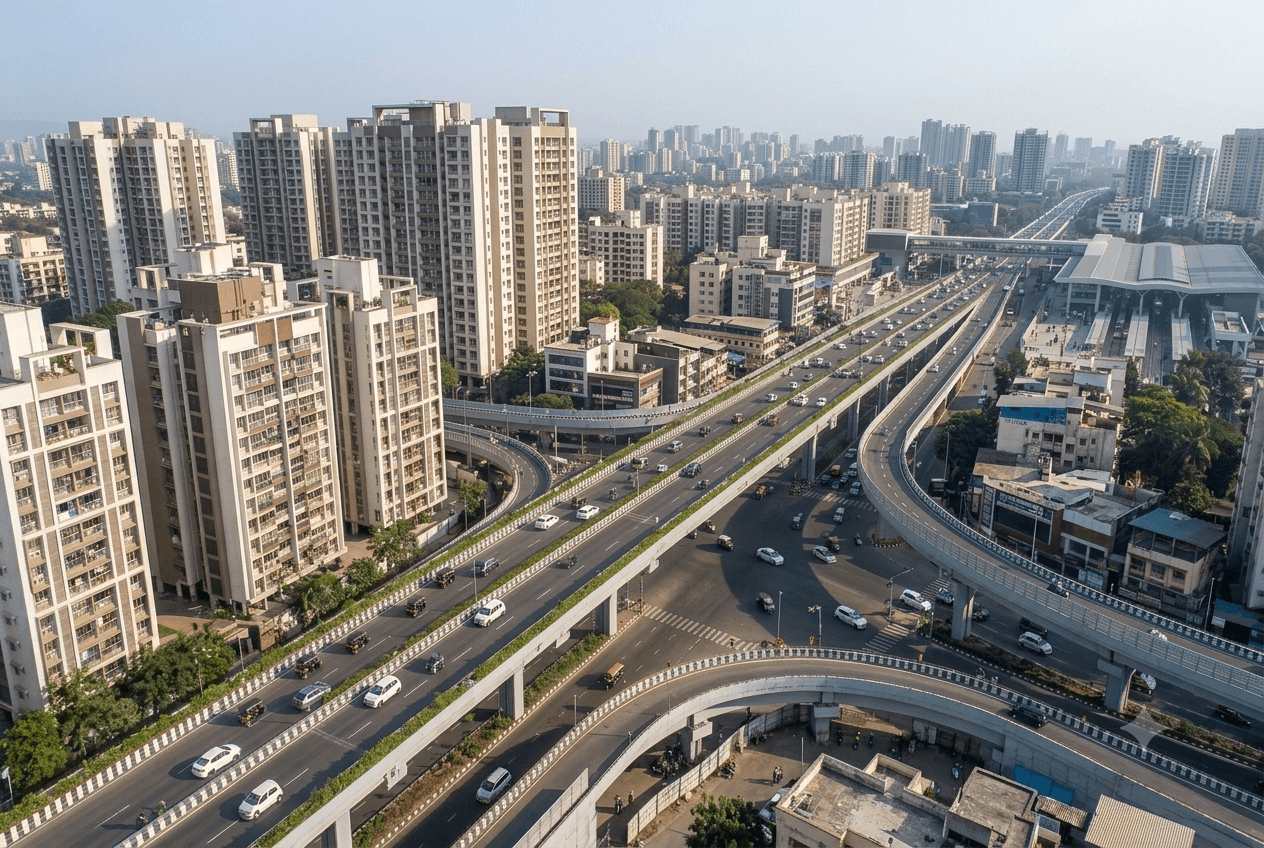
Is the Mrinal Tai Gore Flyover Making Oshiwara a Better Place to Buy a Home...
In Mumbai real estate, connectivity can change the way buyers look at an entire neighbourhood. A locality that once felt inconvenient because of traff...
Blog
2026-08-21
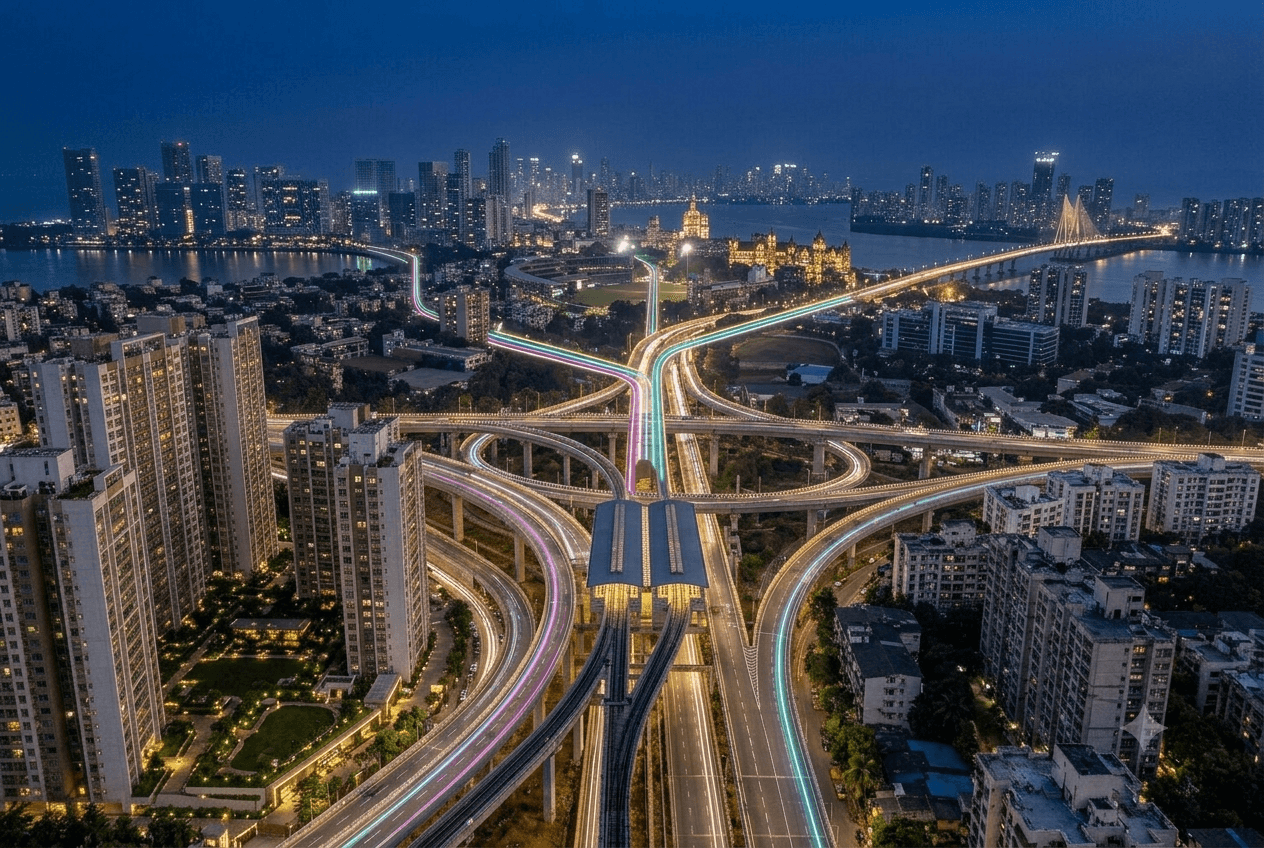
Why Chembur Is Mumbai’s Connectivity Sweet Spot in 2026: BKC, South Mumbai ...
Why 2 BHK Apartments in Chembur Are Drawing Serious Buyer InterestBuying a home in Mumbai often means making a compromise. You may get a larger home b...